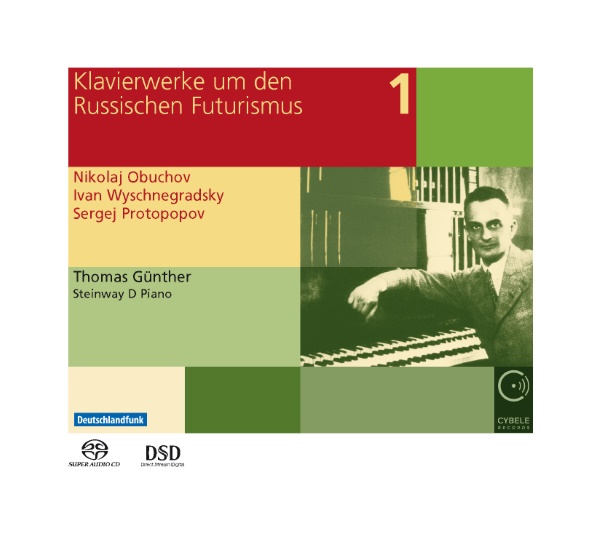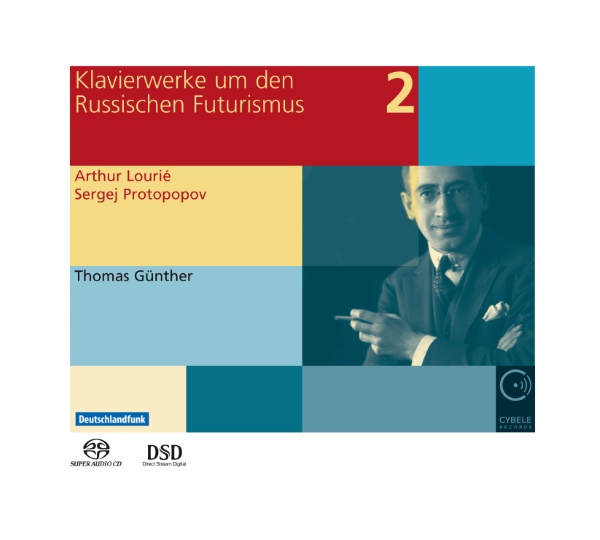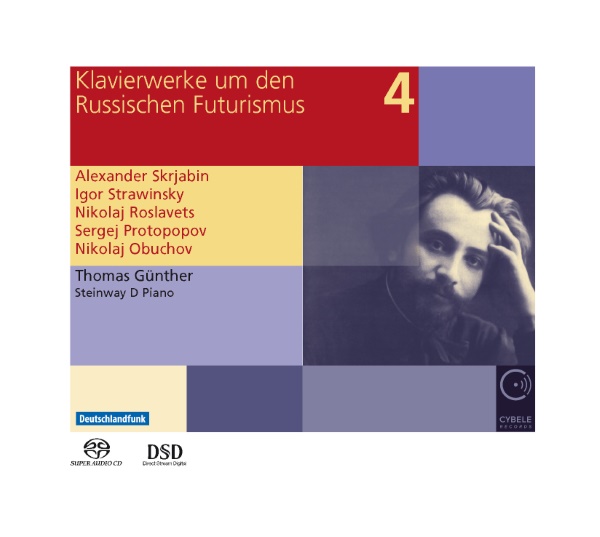
Born in Moscow in 1893 and died there on 14 December 1954; Sergej Protopopov studied medicine at Moscow University from 1913 to 1917 and composition with Boleslaw Jaworski at the Kiev Conservatory from 1918 to 1921. He worked as a choral director and taught at the Moscow Conservatory from 1938 to 1943. Jaworski’s theory of modal rhythm shaped his theoretical reflections and his compositions; in 1930 his treatise on the elements of musical language appeared. In the 1920s he was close to the ASM, which from 1923 acted as the Soviet section of the Internationale Gesellschaft für Neue Musik; this connection favoured the printing of his works by the Viennese Universal Edition. From 1934 to 1936 he was interned in labour camps; after that he composed hardly anything more. After Jaworski’s death in 1942 his estate was entrusted to him. At the centre of his small output stand the three piano sonatas of the 1920s; alongside these he wrote songs, cello sonatas, orchestral pieces and an opera. In the Cybele catalogue his music is represented on three albums, all of which belong to the series Piano Works around Russian Futurism: Thomas Günther recorded them on the Steinway D concert grand. Vol. 1 (2009) was made in the chamber music hall of the Deutschlandfunk in Cologne as a co-production with the broadcaster and places him alongside Obuchov and Wyschnegradsky. Vol. 2 (2014) links him with Arthur Vincent Lourié, Vol. 4 (2016) with Skrjabin, Strawinsky, Roslavets and Obuchov. The series received the ECHO Klassik 2017 for the solo recording of the 20th/21st century and was nominated in 2016 for the Jahrespreis der deutschen Schallplattenkritik.
Sergej Protopopov
Composer / Music theorist