
Studio & technology
Monitoring environment & studio acoustics
Judging sound precisely – at the highest acoustic level
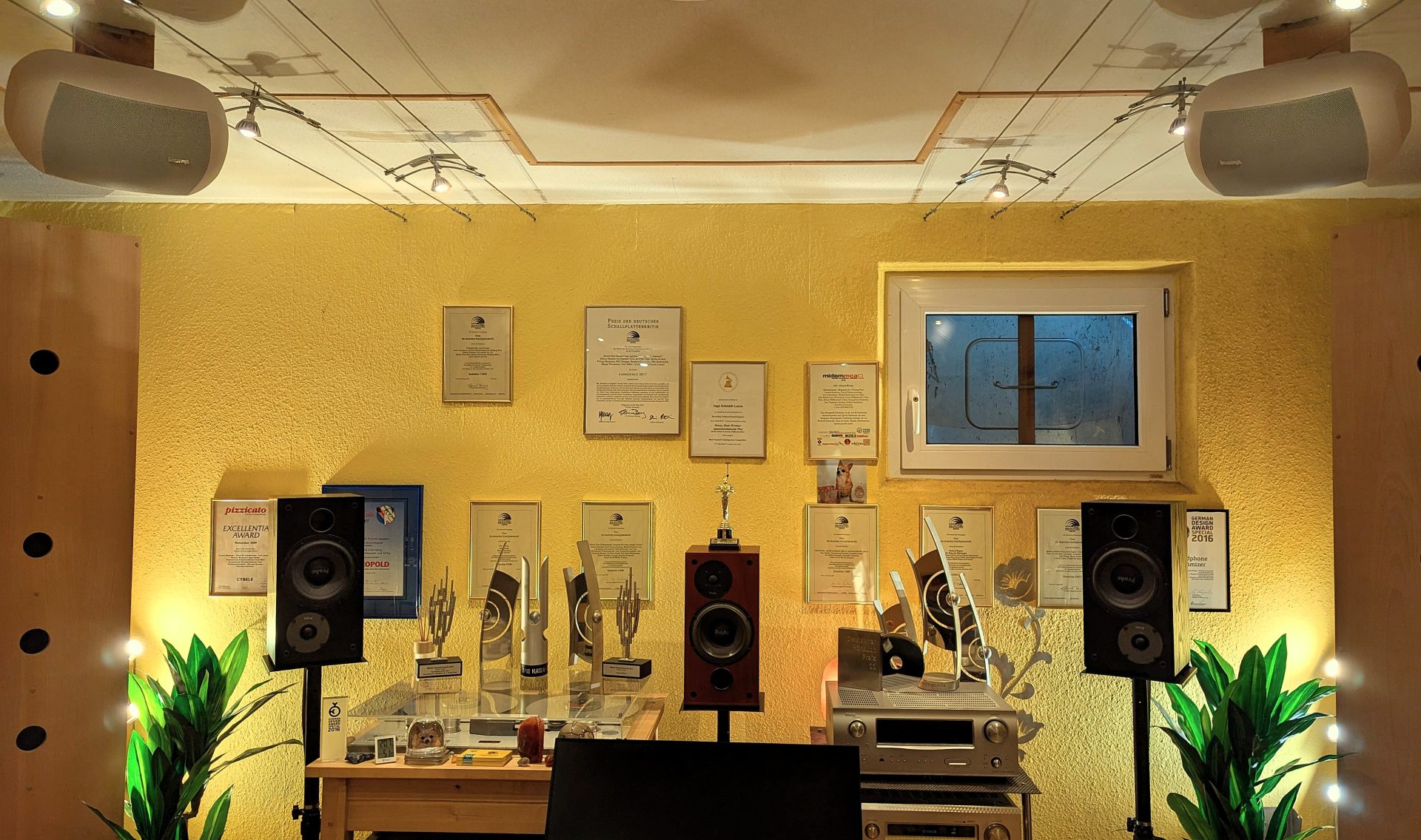
A precisely aligned monitoring environment is available for judging sound in the studio. It comprises seven British-built ProAc Studio 100 studio loudspeakers in a surround array, known for their natural reproduction, high resolution and precise spatial imaging, four Desono Biamp MASK6C speakers for the Dolby Atmos upper layer and an SVS PB12-Plus subwoofer for precise control of the low end. Even very low frequencies down into the infrasound range can thus be assessed under control and, where necessary, treated deliberately.
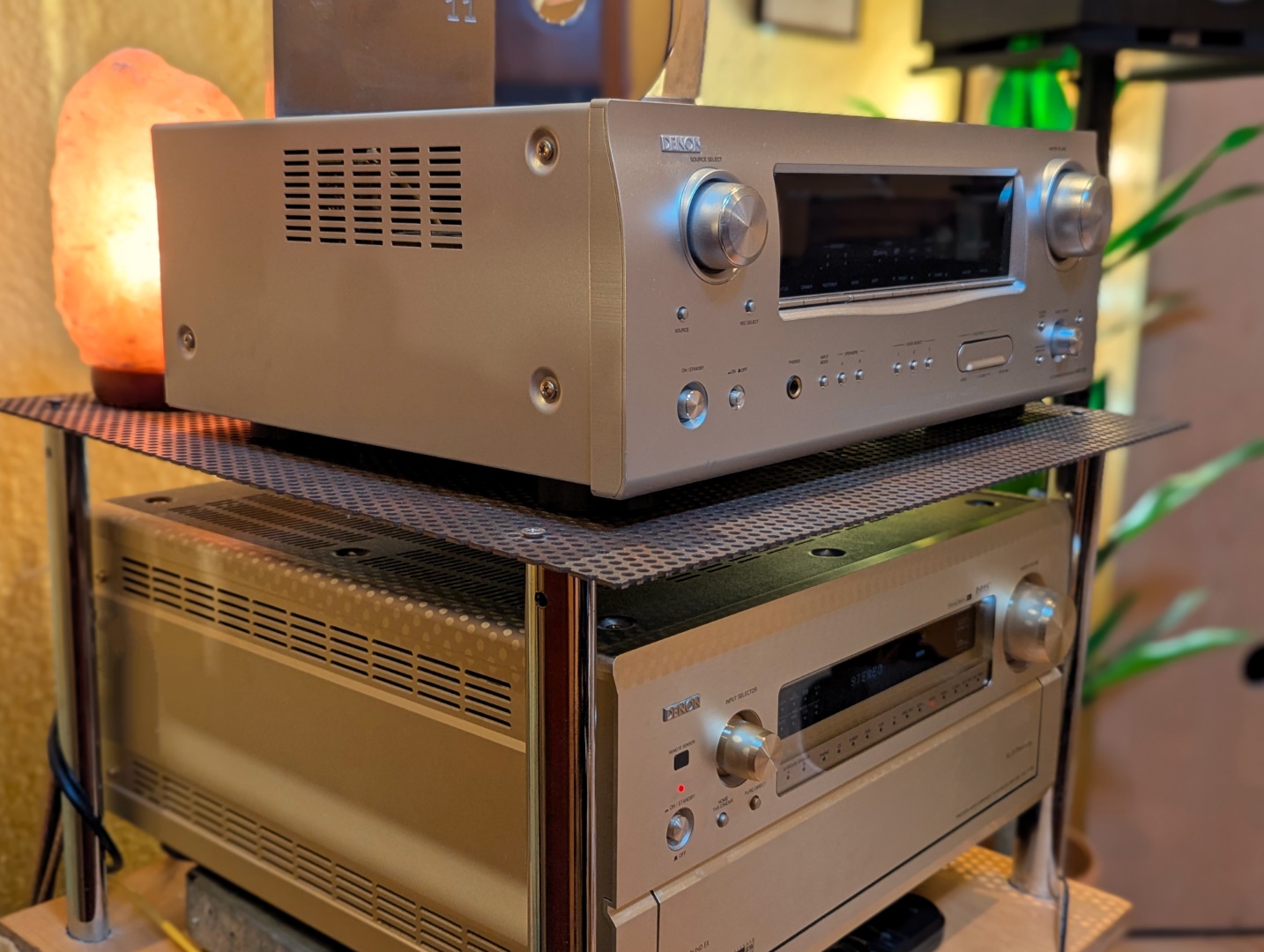
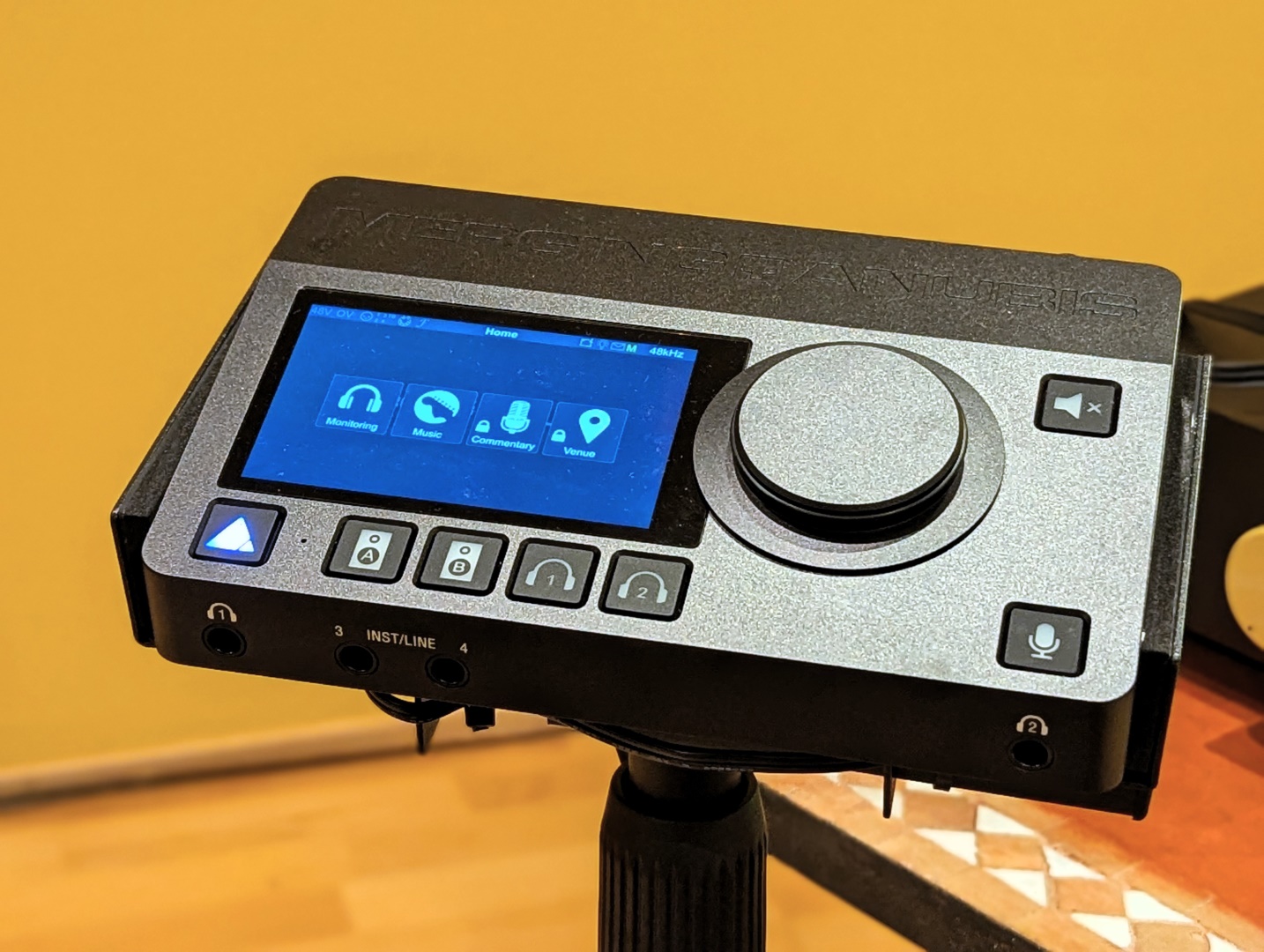
The analogue monitoring chain also includes the DENON AVC-A1SE 7.1-channel reference amplifier, weighing almost 28 kg, and the Merging Anubis SPS Premium monitor controller. HORUS and Anubis are linked over the high-resolution Merging audio network. The Anubis provides precise monitor control and handles high-resolution formats such as DXD within the studio.
A particular feature of this architecture is the consistently analogue path after digital-to-analogue conversion: the high-resolution signal is processed inside the Merging system and output through the D/A converter. From that point on it runs entirely analogue through the studio chain to the twelve loudspeakers. Judgement of the sound therefore remains free of any further digital processing in the final monitoring path.
DSD productions, too, can be monitored at the highest reference level through the Merging signal architecture. This uncompromising analogue environment is an essential basis for authentic mixes and masters in which musical naturalness, spatial depth and transparency come first.

Microphone technique
The basis of every spatial, natural recording
Choosing and placing the microphones is among the most important creative decisions of a recording. It largely determines how instruments, voices and rooms are perceived – from the immediate presence of individual sources to the natural rendering of a whole acoustic environment.
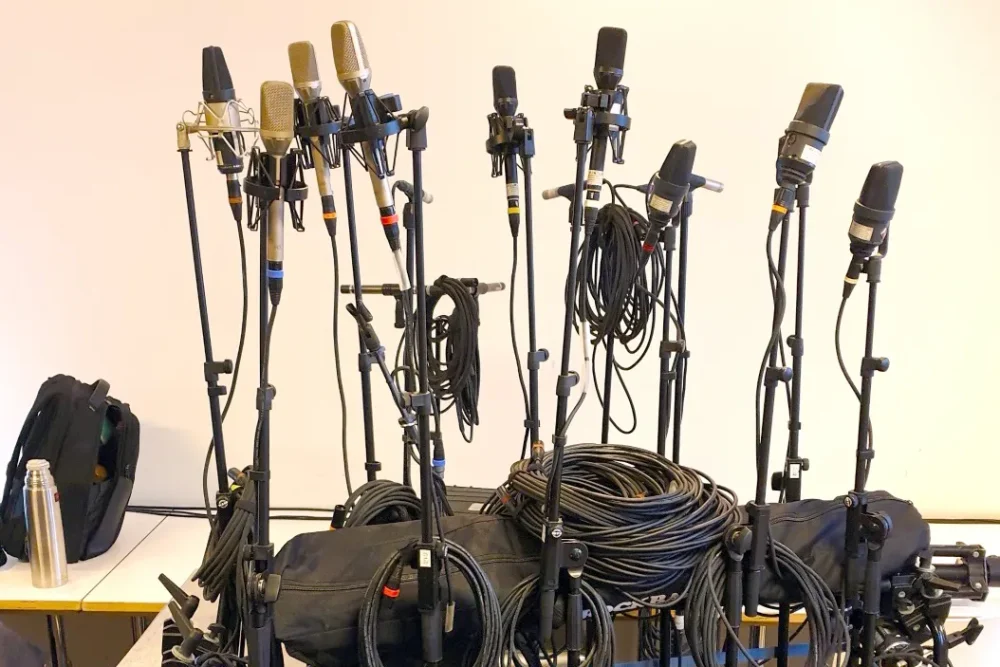
Cybele works with a carefully assembled collection of fine microphones from various makers and technologies. Depending on the forces, the room and the artistic aim, both classic studio microphones and specialised systems for immersive audio are used.
Microphones from the following makers are among those in use:
- Neumann (U87i, U89i, TLM 170i, KM 83i, KM 183, GFM 132 and others)
- Sennheiser (MKH 800 Twin, e912, MD 421)
- Microtech Gefell (UMT 70 S)
- DPA (K4011, 4061 BM Low Sens Lavalier)
- RØDE (NT4, NT5, NTG-2 shotgun, SoundField Ambisonics microphone, Wireless GO II wireless kit)
- HEADacoustics (dummy-head system for 3D binaural stereo)
- M-Audio Sputnik (valve microphone with 6205M vacuum pentode)
Depending on the musical context and the spatial image required, we use all the classic stereo techniques:
- Decca Tree
- ORTF
- NOS
- DIN
- AB
- MS
- XY
- Blumlein
- head-related stereophony (3D binaural stereo)
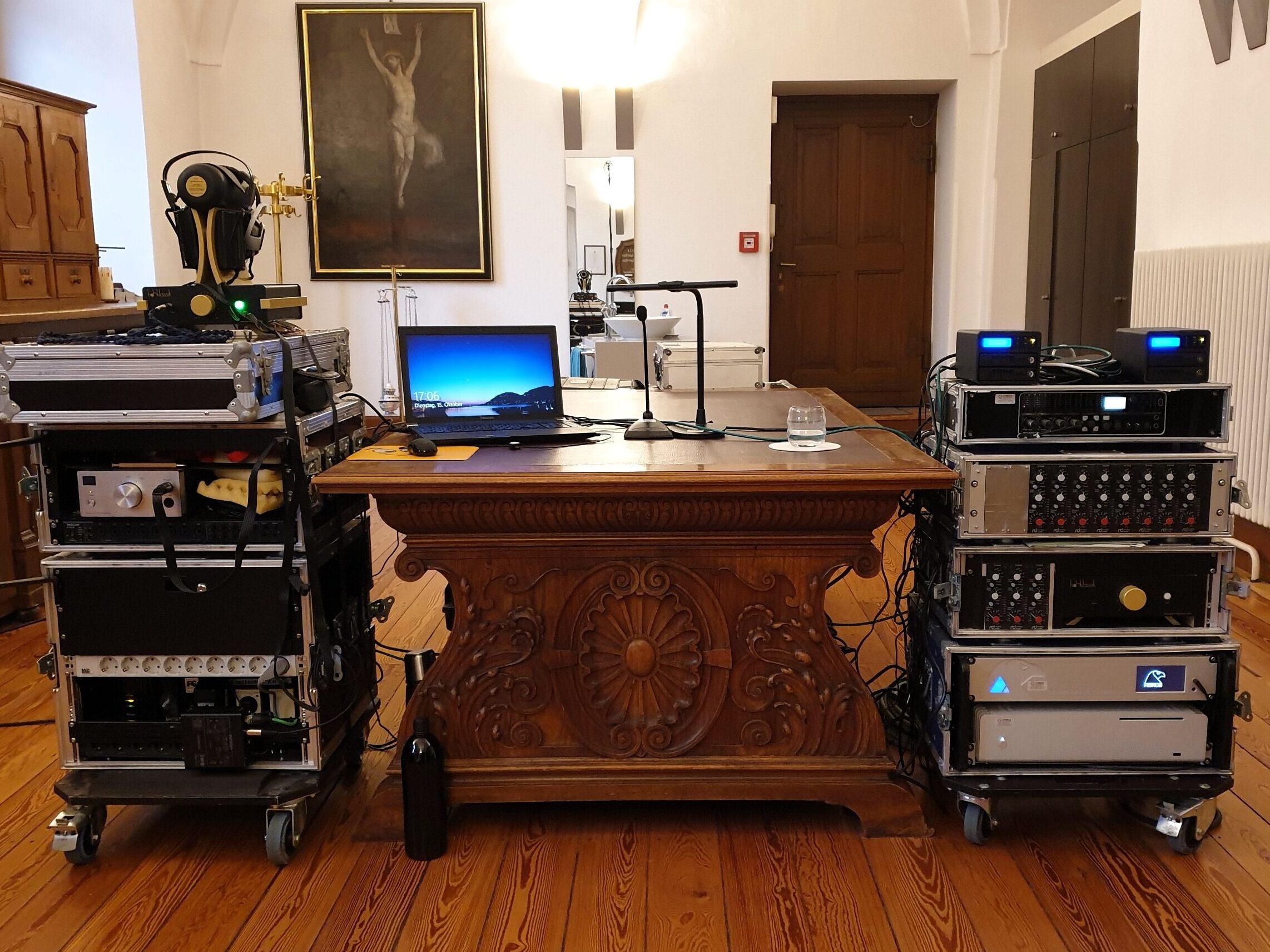
These techniques are then tailored to each project and combined with modern immersive methods, so that natural spatial images, three-dimensional sound fields and forward-looking formats such as Ambisonics and Dolby Atmos are realised in a musically convincing way.
Headphone monitoring
Linear control for recording, mixing and mastering
A precise judgement of sound, space and balance is decisive at every stage of a production – on location under acoustically demanding conditions as much as in the final mix and the mastering of immersive formats.
In churches, sacristies or smaller chamber music halls there is often no ideal loudspeaker monitoring on site. Our high-resolution reference headphone systems, individually equalised in the analogue domain, allow reliable control of the sound from the soundcheck onwards.
Analogue linearisation adjusts the frequency response naturally, without additional digital processing in the monitoring chain. The integrity of the signal is preserved, and the finest differences in balance, room content and timbre can be judged reliably.
These reference systems are used in post-production as well – above all for judging 3D binaural stereo and headphone-optimised immersive mixes, for instance in connection with Dolby Atmos. Spatial placement, depth layering and the natural effect of the sound field can thus be checked precisely.
Linearly optimised reference systems
- STAX SR-L700 and SR-L500 “Earspeakers” with the STAX SRM-727II solid-state driver amplifier, individually linearised in the analogue domain by the hd-klassik Headphone Optimizer (HOU)
- Sennheiser HD800, individually linearised in the analogue domain by the hd-klassik Headphone Optimizer Pro (HOP)
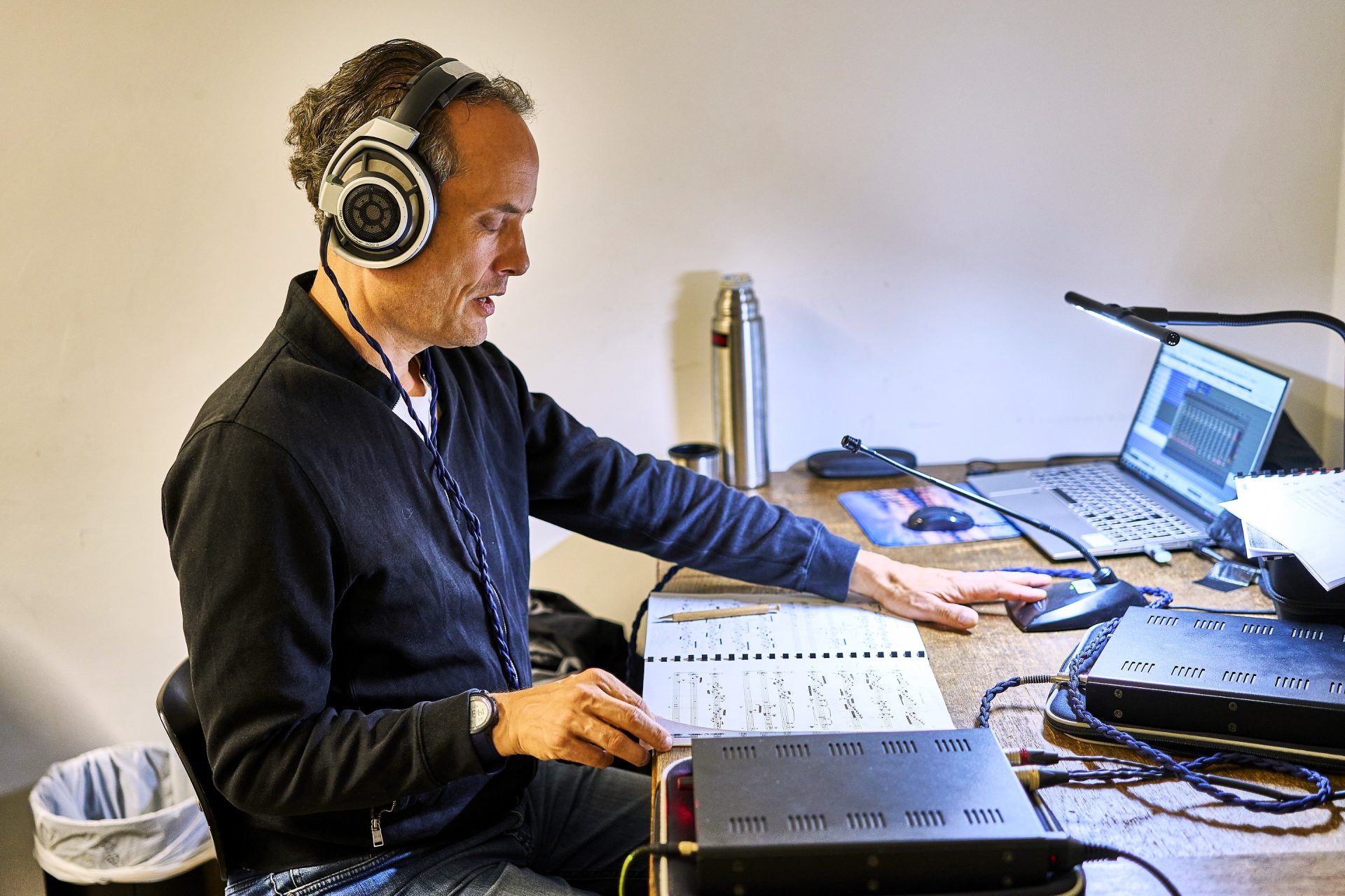
These systems give a particularly neutral and natural reproduction on location or in the studio, so that important decisions about microphone setup, balance, spatial imaging and placement can be taken with the greatest precision during recording and mixing.
“For studio and location work a system like this is the last word in fidelity – not only at the mixing stage, but already at the soundcheck.”
Wulfin Lieske, guitarist and composer
Additional systems for real-world listening situations
Alongside the linearised reference systems, deliberately unmodified headphones are available to assess how a mix behaves under different real listening conditions:
- AKG Q701
- Audeze EL-8 Closed Back
These two headphones are not used for high-precision reference equalisation but as a further check on how a production translates to typical consumer equipment – how balance, spatial effect and immersive content come across on widely used headphones outside the idealised studio.
Together, analogue-linearised reference systems and everyday comparison headphones allow a thorough assessment of every production – from precise technical analysis to a realistic estimate of what listeners will hear.
Technical overview
A high-resolution production environment for classical and immersive audio
Cybele combines fine analogue and digital studio equipment with contemporary production methods for classical music, immersive audio formats and audiovisual media.
The equipment is designed to safeguard musical naturalness, spatial depth and the highest transparency at every stage.
Digital audio production
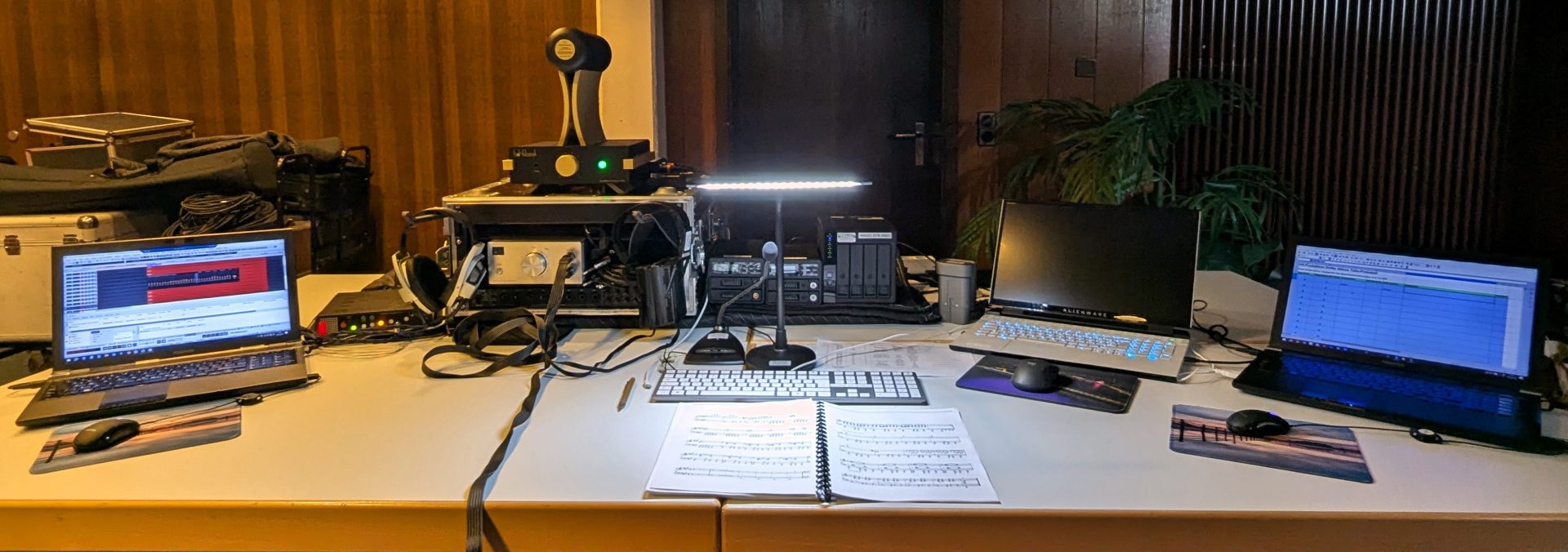
- Merging Pyramix with the premium “Unlimited” licence as the central digital audio workstation for high-resolution post-production, mixing and mastering
- Merging HORUS high-end audio interface (48 channels)
- Merging HAPI high-end audio interface (16 channels)
- Merging Anubis SPS Premium monitor controller on the Merging audio network (32 bit 352.8 kHz, DXD capable)
- PCM processing up to 32 bit float / 384 kHz
- DXD processing up to 32 bit / 352.8 kHz
- native DSD workflows from DSD64 to DSD256
- Dolby Atmos production (7.1.4)
- Ambisonics processing up to higher order Ambisonics
- Apple Digital Masters workflow (Cybele is a certified Apple partner)

Microphone technique
The microphone setup is one of the most important creative tools of a recording. Different types and systems are used according to the forces involved, the room and the artistic aim.
Among the microphones in use are fine models from several renowned makers:
- Neumann (U87i, U89i, TLM 170i, KM 83i, KM 183, GFM 132 and others)
- Sennheiser (MKH 800 Twin, e912, MD 421)
- Microtech Gefell (UMT 70 S)
- DPA (K4011, 4061 BM Low Sens Lavalier)
- RØDE (NT4, NT5, NTG-2 shotgun, SoundField Ambisonics microphone, Wireless GO II wireless kit)
- HEADacoustics dummy-head system for 3D binaural stereo
- M-Audio Sputnik (valve microphone with 6205M vacuum pentode)
Monitoring environment
An aligned reference monitoring environment is available for judging sound, space and dynamics precisely:
- 7 × ProAc Studio 100 studio loudspeakers, British high-end build
- 4 × Desono Biamp MASK6C speakers for the Dolby Atmos upper layer
- SVS PB12-Plus subwoofer
- DENON AVC-A1SE 7.1-channel reference amplifier
- Merging Anubis SPS Premium Monitoring Controller
HORUS and Anubis are linked over the high-resolution Merging audio network. After digital-to-analogue conversion in the HORUS interface, the signal runs on in the analogue domain all the way to the loudspeakers.
Headphone monitoring
Linearly optimised reference systems
- STAX SR-L700 and SR-L500 “Earspeakers” with STAX SRM-727II solid-state driver amplifier
- individually linearised in the analogue domain by the hd-klassik Headphone Optimizer (HOU)
- Sennheiser HD800
- individually linearised in the analogue domain by the hd-klassik Headphone Optimizer Pro (HOP)
These systems allow a particularly neutral and precise assessment of balance, spatial imaging and immersive mixes.
Comparison systems for real-world listening
- AKG Q701
- Audeze EL-8 Closed Back
These headphones are deliberately used unmodified, as comparison systems for checking how a mix translates to different real listening situations.
Analogue mastering & restoration
- SPL PASSEQ analogue mastering equaliser
- SPL Tube Vitalizer
- CEDAR restoration system
- Telefunken M15A professional quarter-inch studio tape machine (19.05 / 38.1 cm/s), optionally with the Telcom C4 compander
- EMT 938 professional broadcast turntable with various cartridges for shellac and vinyl
- Akai GX-75 Mk II high-end reference-class cassette deck
Video & immersive media
Professional camera systems are available for concert, music video and VR productions, for both conventional multi-camera work and immersive 360° productions:
- up to 8 Sony 4K Ultra HD cameras for concert films, music videos and live recordings
- three Nokia OZO VR cameras for immersive 360° video productions
- production and integration of spatial audio formats such as Dolby Atmos and Ambisonics
Recording techniques & spatial microphone setups
Classic and modern techniques are used for natural spatial imaging, precise stereo and three-dimensional sound fields:
- Decca Tree
- ORTF
- NOS
- DIN
- AB
- MS
- XY
- Blumlein
- 3D binaural stereo
- Ambisonics up to higher order Ambisonics
More topics from Studio