
Immersive audio
Dolby Atmos
Not just hearing music – experiencing it
Dolby Atmos opens up a new dimension of musical perception.
At Cybele we regard immersive audio formats not as technical effects but as an extension of musical space. Our Dolby Atmos productions come from high-resolution sources and combine a natural rendering of the room with contemporary immersive playback.
The foundations are:
- recording and production in native DSD quality on request
- high-resolution PCM productions up to 32 bit / 384 kHz (up to 96 kHz for Dolby Atmos)
- Merging Pyramix as the central production platform
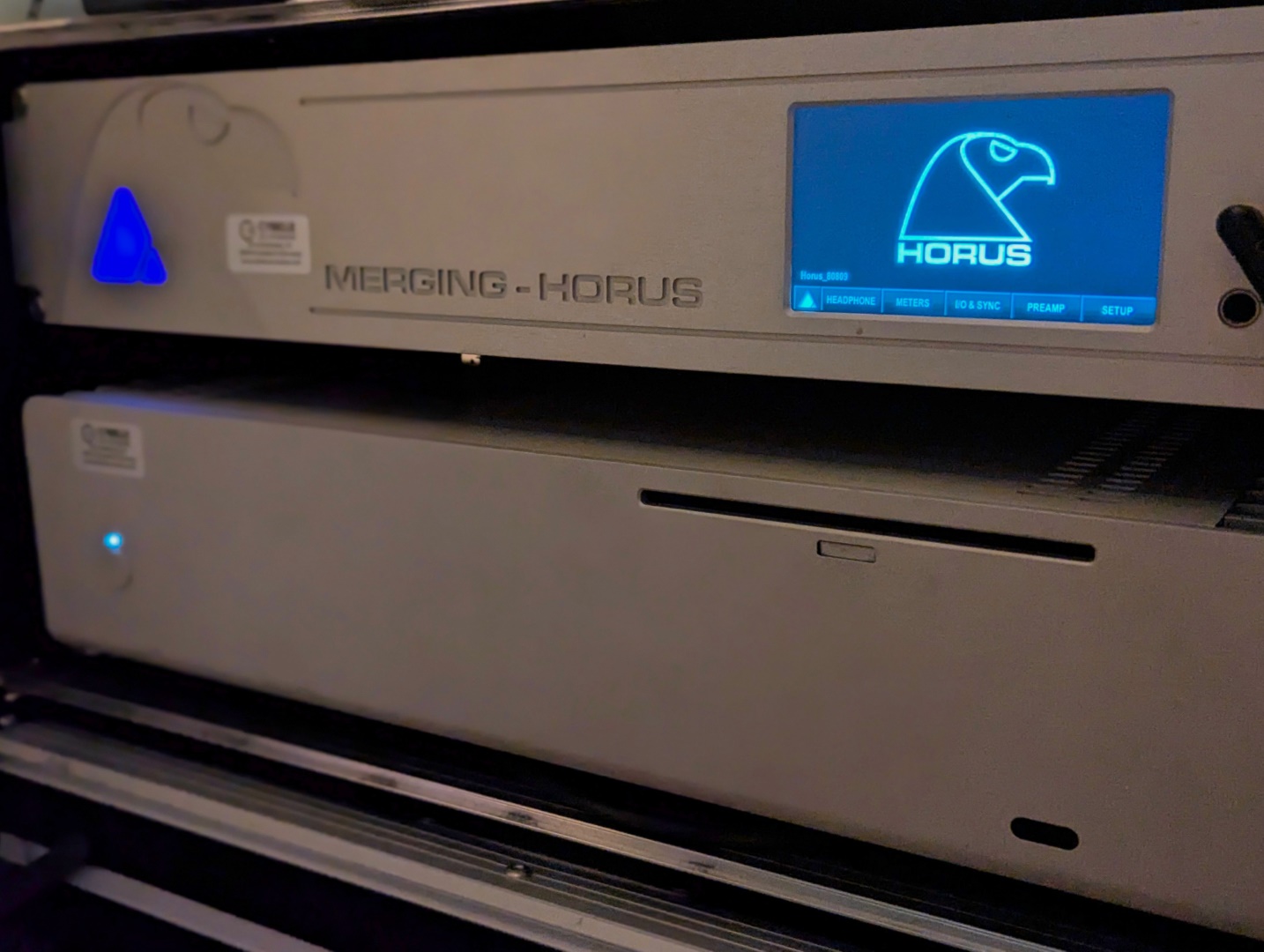
- Merging HORUS and HAPI audio interfaces (up to 64 channels)
- a referenced 7.1.4 Dolby Atmos monitoring system in the studio
- high-grade multichannel A/D conversion for productions at reference level
The result is not a spectacular effect but an immersive listening experience that conveys music with the greatest possible naturalness, transparency and spatial depth.
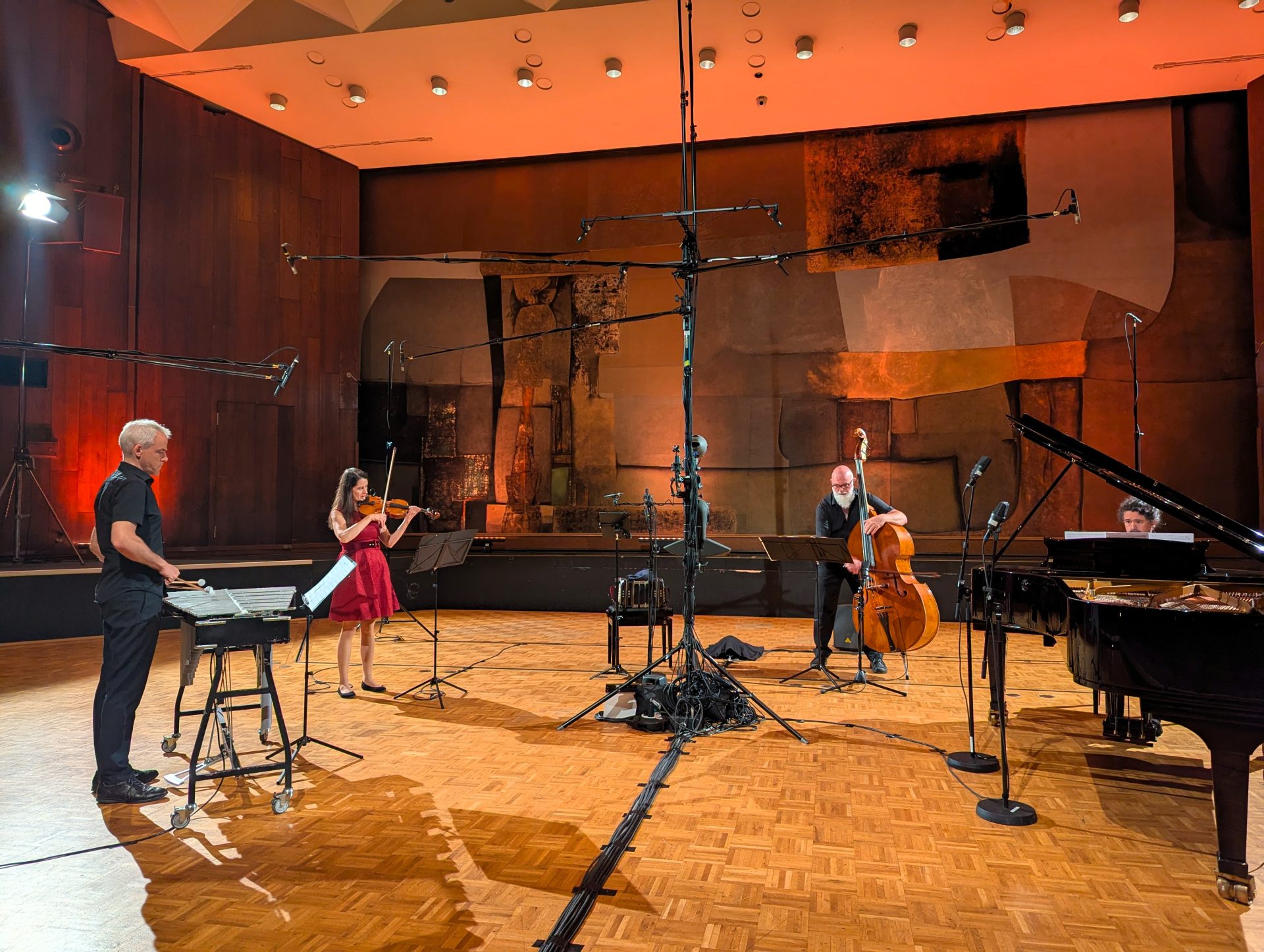
Experiences with Dolby Atmos
When sound becomes an experience
Many artists experience Dolby Atmos not primarily as a technical innovation but as a new form of musical perception. Again and again it becomes clear that the technology is at its strongest when it places itself entirely at the service of the music.
“An incredible experience – I listened to our Elijah file open-mouthed! The depth and warmth of sound that Dolby Atmos achieves, together with maximum transparency, is simply magnificent – quite plainly the future of audio engineering!”
Jörg-Hannes Hahn, conductor and organist
“I remember well the first time Ingo Schmidt-Lucas played me a Dolby Atmos production in his studio. The clarity, the wealth of colour and the vitality with which the organ had been captured were overwhelming.”
Wolfgang Kogert, organist
“The intensive collaboration with Ingo Schmidt-Lucas for Cybele on my tango project, so close to my heart, together with hearing it in Dolby Atmos for the first time and the patient work on the sound, was a very special experience for me.
Sinking spatially into the quietest, most intimate, improvisatory and striking moments of sound, paired with Ingo’s instinct and his ability to draw the utmost from an already first-rate recording, is impressive.
This union of artistic vision, musical sensitivity and innovative recording technique makes the experience unique for me.”
Susanne Hofmann, violinist
“Listening to the music became a feast for the senses. Technical means make the beauty of the music tangible in a quite particular way.
An immediacy arises that leaves the impression of the violinist standing right beside you. As you sink in, images, colours and new horizons appear; feelings and thoughts are set in motion.
This is not the work of a technology enthusiast, but of someone who is a musician through and through!”
Felicia Friedrich, singer and choral conductor
Would you like to experience Dolby Atmos and immersive audio for yourself?
Arrange a personal listening session at the studio ahead of your project. Together we will discuss your artistic ideas and show you what immersive music production can do today.
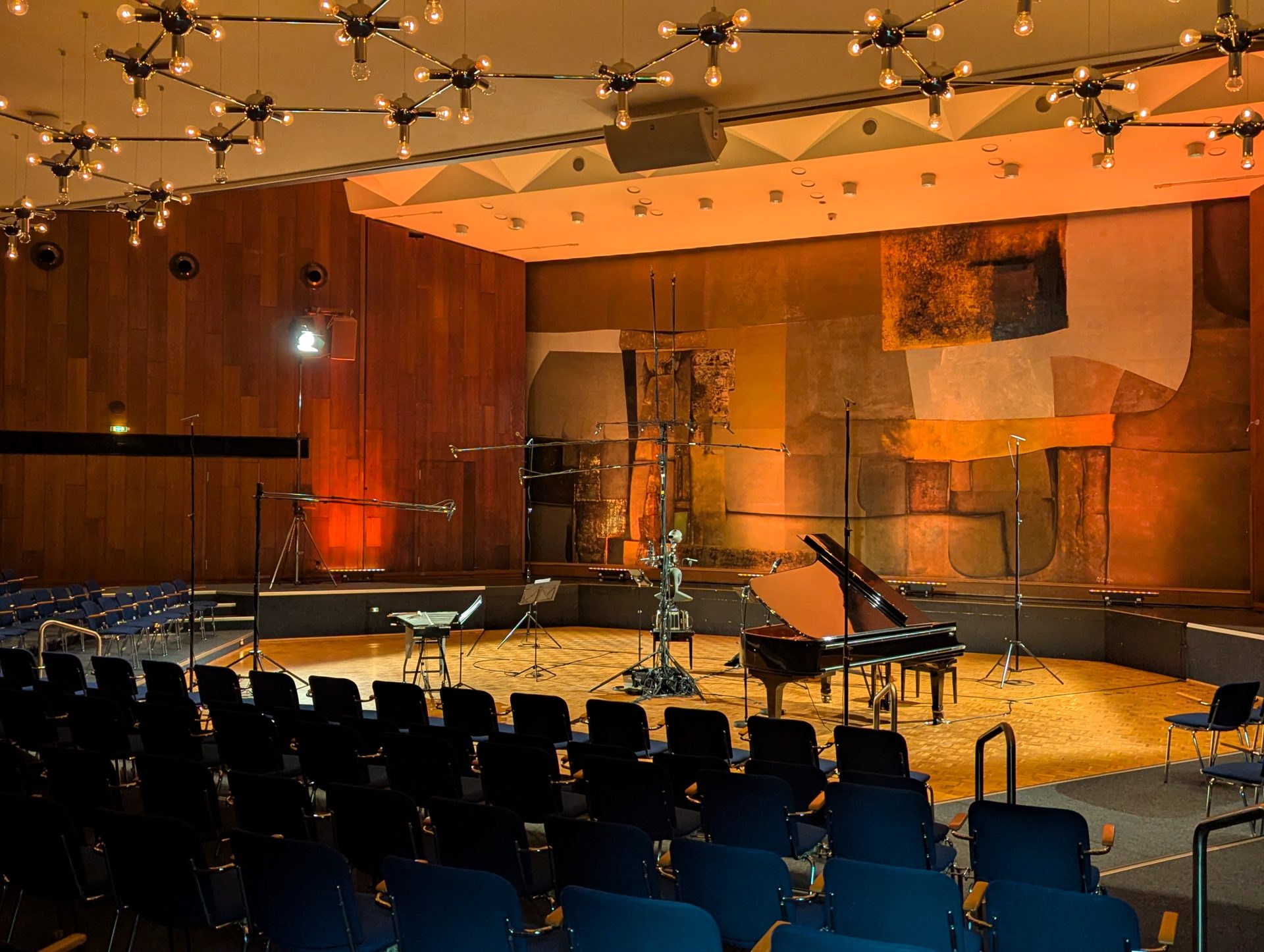
3D binaural stereo
Immersive sound over any pair of headphones
3D binaural stereo allows an exceptionally natural sense of space – no loudspeakers, no decoder, no additional hardware.
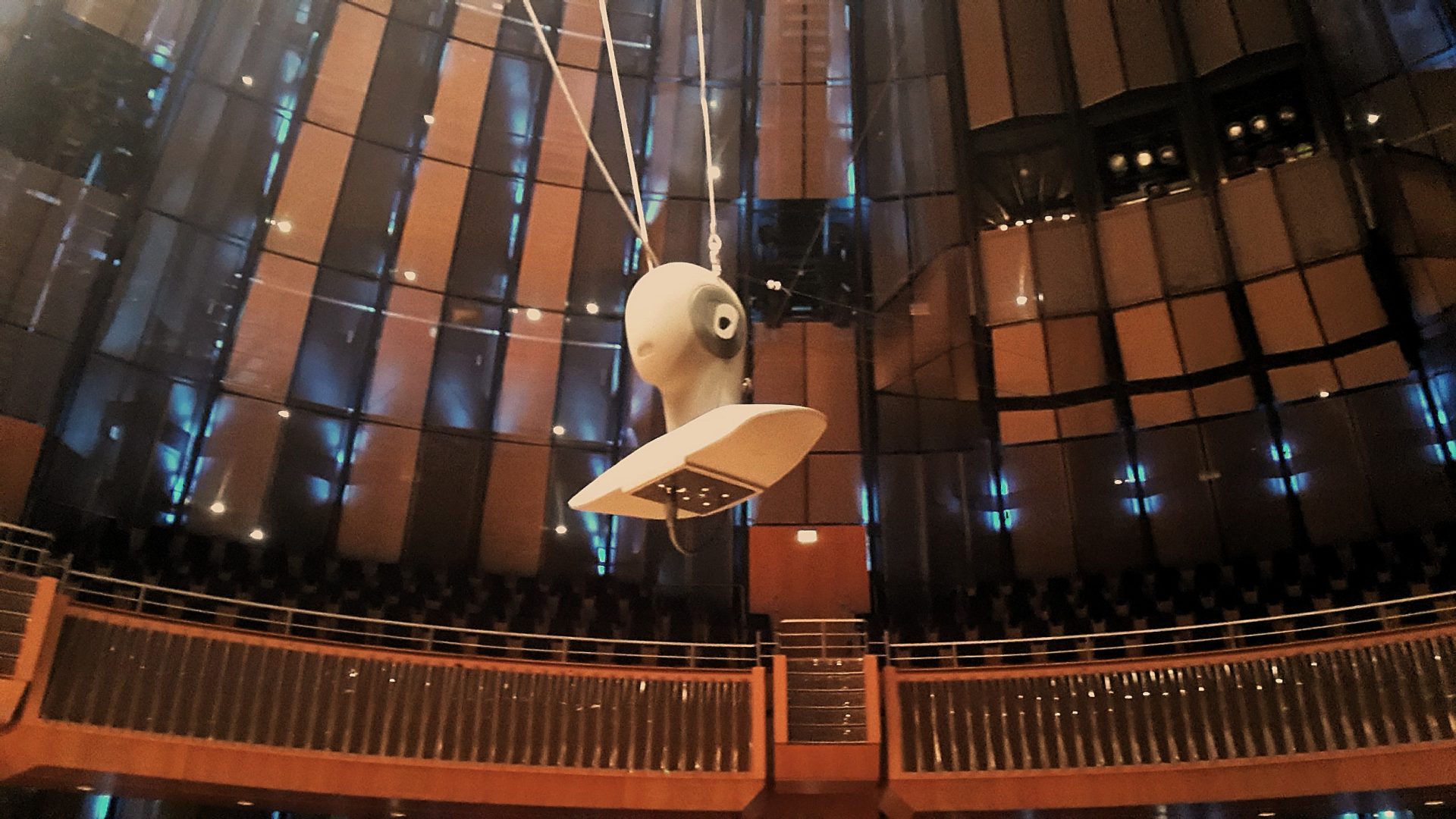
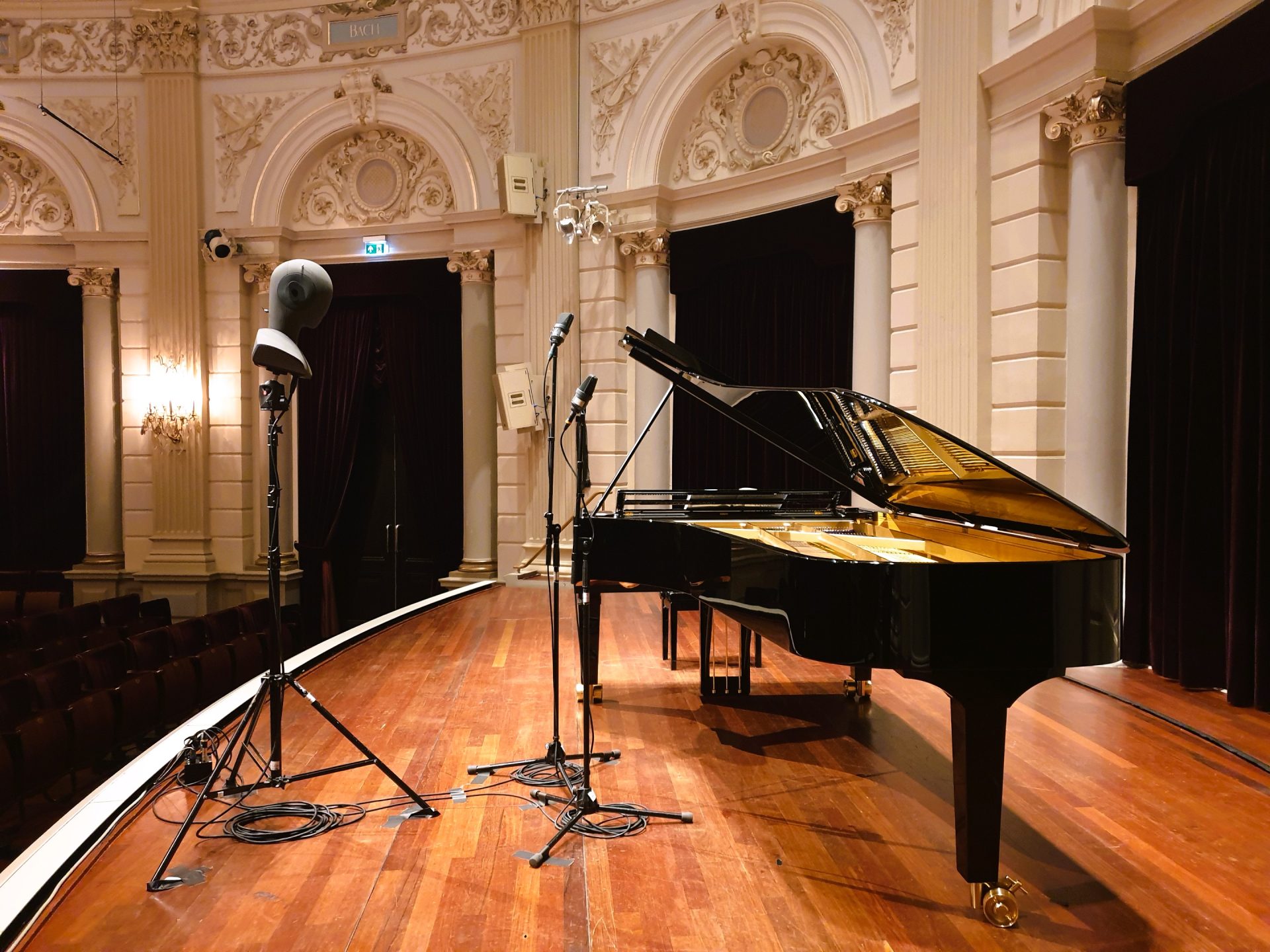
At Cybele we use a specially optimised HEADacoustics dummy head together with high-grade studio equipment and analogue equalisation.
More than 50 productions have now been made in this format.
The result:
- three-dimensional localisation in height, width and depth
- a natural rendering of the room
- immediate closeness to the musical interpretation
- playback over ordinary headphones
For classical music in particular, this makes for an unusually intense listening experience.
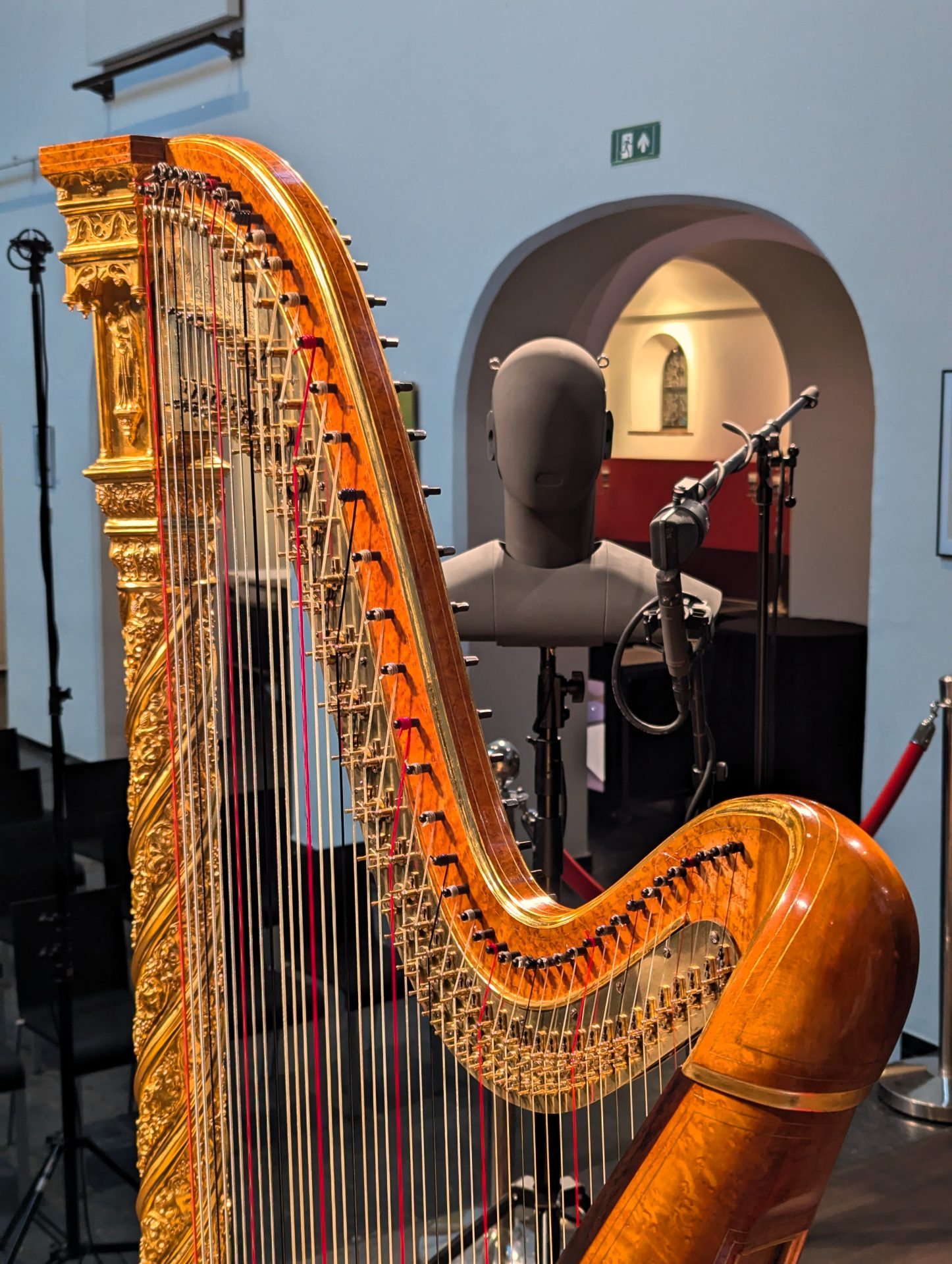
Artists’ voices
“The 3D binaural sound of your Reger organ recording is a truly impressive experience! Incredibly spatial – you think you are there in the church.”
Fritz Siebert, harpsichordist
“I find the whole project fascinating.”
Simone Young, conductor
DSD
Sound in its purest form
We have worked with native DSD since 2004. Even then Cybele Records was among the few independent labels which, through the collaboration with Sony and Philips, gained early access to DSD workflows and the corresponding production technology.
Direct Stream Digital allows an exceptionally natural portrayal of sound, space and dynamics.
DSD64 is based on a sampling rate of 2.8224 MHz and underpins many of our audiophile productions. Analogue conversion is handled by high-grade Merging converter technology, which captures the finest musical detail precisely and transparently.
For editing and mixing we use DXD at 32 bit / 352.8 kHz before immersive formats such as Dolby Atmos are derived from it. High-resolution DXD processing is maintained right through the monitoring chain: a Merging Anubis SPS Premium network audio interface with integrated monitor control handles DXD directly and converts the high-resolution digital signal only immediately before the analogue studio playback. Judgement of the sound thus takes place over the studio’s analogue chain without any further reduction of digital resolution.
For us DSD is not a technical end in itself, but a tool for preserving musical authenticity as faithfully as possible.
Ambisonics
Spatial sound fields for immersive media
Ambisonics allows a complete description of a three-dimensional sound field and is therefore an important basis for immersive audio applications.
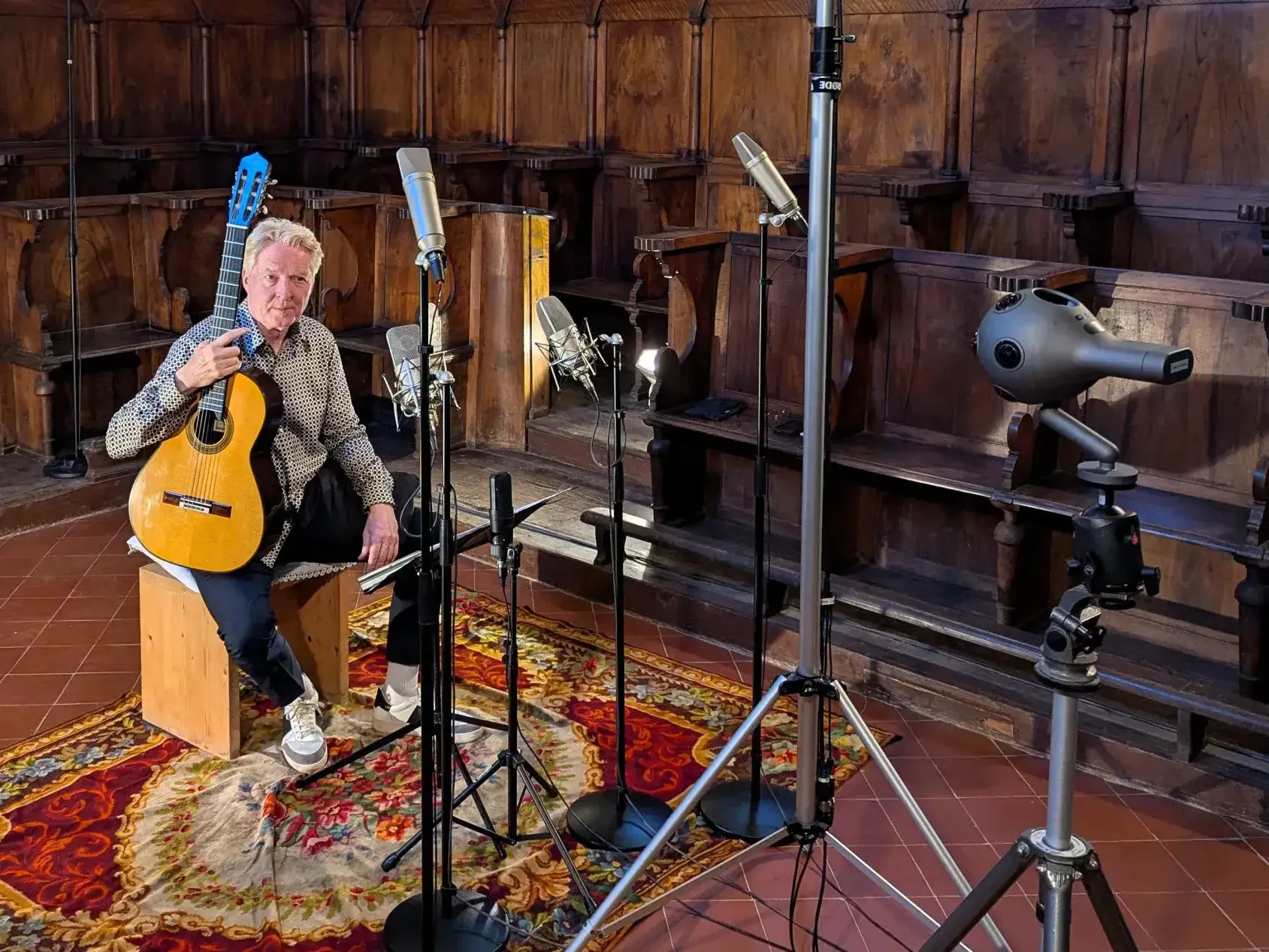
Cybele uses Ambisonics above all for immersive audio mixes in VR and 360° video productions. The spatial orientation of the sound field is retained: when a viewer wearing a VR headset turns within the virtual environment, the perceived direction of the sound follows the movement of their gaze. The result is a natural, immersive experience in which picture and sound remain spatially bound to one another.
Ambisonics is used, among other things, for:
- immersive media productions
- VR and 360° applications
- spatial audio formats
Methods up to higher order Ambisonics are employed in order to render complex three-dimensional sound spaces precisely.
More topics from Studio