On Gottfried Silbermann
,,…the excellent cleanliness, quality and durability of the materials as well as of the workmanship; the great simplicity of the internal layout; the uncommonly splendid and full voicing; and the exceedingly light and comfortable keyboards” – this praise of Gottfried Silbermann’s organs by Bach’s pupil Johann Friedrich Agricola attests to the organ builder’s exceptional standing in high-baroque Germany.
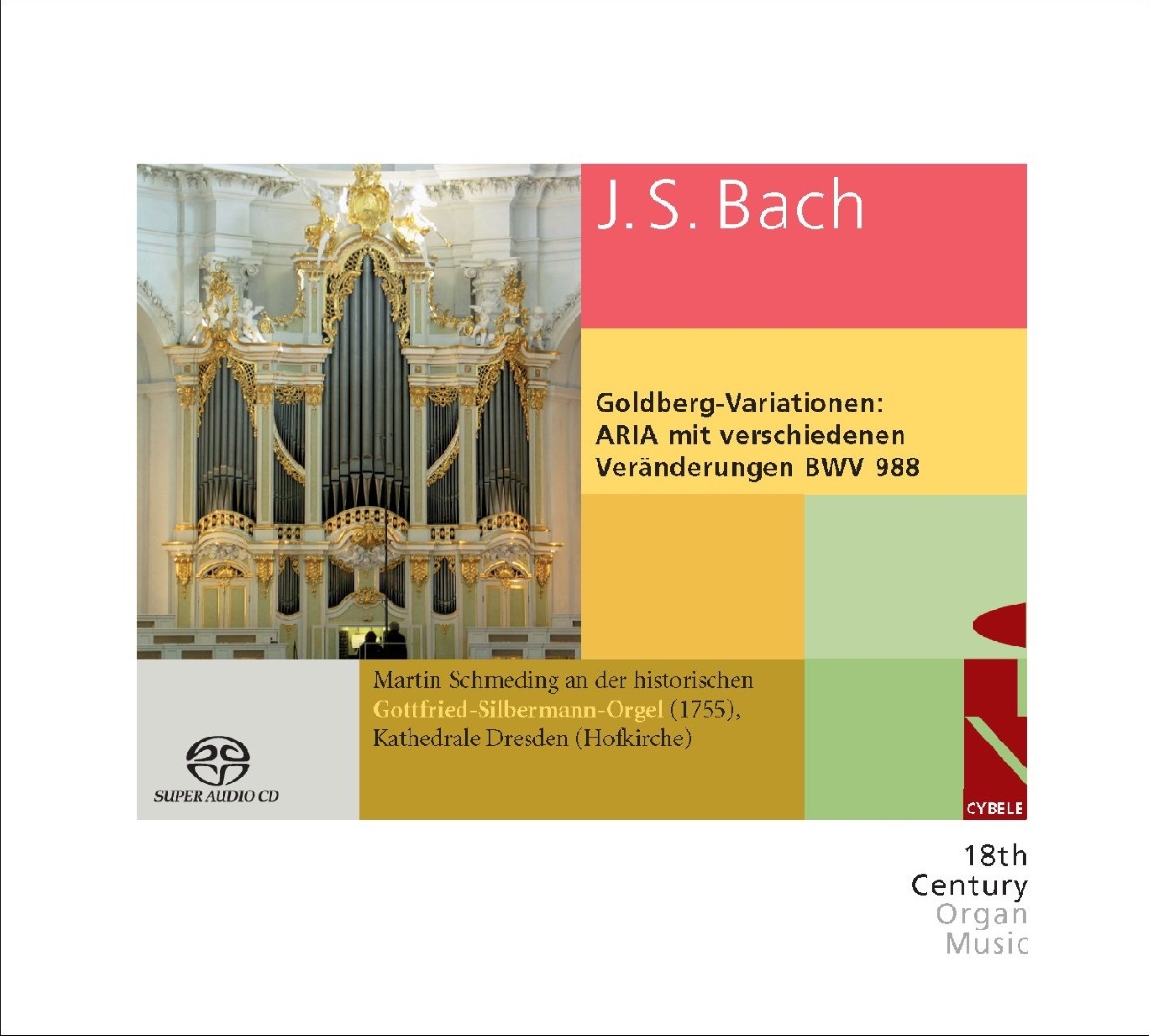
The organ of the Hofkirche in Dresden (the cathedral)
was inaugurated in 1755, a few years after Bach’s death, and with 47 stops on three manuals and pedal it is his largest instrument. When Wolfgang Amadeus Mozart played the organ in 1789, he praised it beyond measure in a letter to his wife.
During the Second World War, in 1944, the complete pipework was moved to Marienstern Abbey shortly before the bombing of Dresden, and it therefore survives in full — with the exception of the Unda maris stop. Since 2001 the organ has sounded once again at its original pitch (415 Hz).
The organ version of the Goldberg Variations
„Aria mit verschiedenen Veränderungen vors Clavicimbal mit 2 Manualen“ (part 4 of the Clavier-Übung) – on the title page of the first edition of the „Goldberg Variations“ Johann Sebastian Bach is unambiguous about the instrument he had in mind: the harpsichord allows great variability of technical and sonic possibilities (crossing of parts, changes of manual, changes of colour, changes of register position and so on). In terms of sound, the arrangement for organ is a consistent extension of the harpsichord version. The wealth of possible stop combinations allows the intended affects — and the sometimes very strong contrasts in the sequence of variations — to be brought out in particularly vivid relief.
One of those who completed the organ, Silbermann’s pupil Zacharias Hildebrandt, had been expressly praised by Bach and Silbermann at the inspection of the Silbermann organ in Naumburg; the instrument of the Dresden Hofkirche thus seems ideally suited to presenting Bach’s late work. In the organ version, played on the large historical Silbermann organ, the Goldberg Variations thus receive a sonic garb of their own, matched to the affect of each variation, which turns them into an interpretative statement in its own right.