
At the end of the 1960s, live electronics was the great catchword of electronic music. Handy devices such as the VCS III synthesizer made by the English firm EMS could be used in many different ways, including in combination with mechanical instruments played live. In 1970 the Folkwang-Hochschule Essen commissioned the Berlin firm Hofschneider to develop three systems for live electronic music. With the delivery of these systems the history of electronic music at the Folkwang-Hochschule began. An ensemble worked with this equipment which had grown out of the “Gruppe MHz” (directed by Günther Becker) and which from 1971 consisted exclusively of members of the Folkwang-Hochschule. These were: Alfred Alings, Günther Becker, Ferdi Brendgen, Mirko Dorner, Pierre W. Feit and Dirk Reith. Over the following years the ensemble changed several times until, in 1973/74, it disbanded as a permanent live electronic ensemble. In 1990 the senate of the Folkwang-Hochschule founded a central, cross-departmental institute, the ICEM (Institut für Computermusik und Elektronische Medien). Looking back on thirty years of electronic music at the Folkwang-Hochschule, one finds that each of those three decades had a very particular technical, compositional and hence aesthetic stamp:
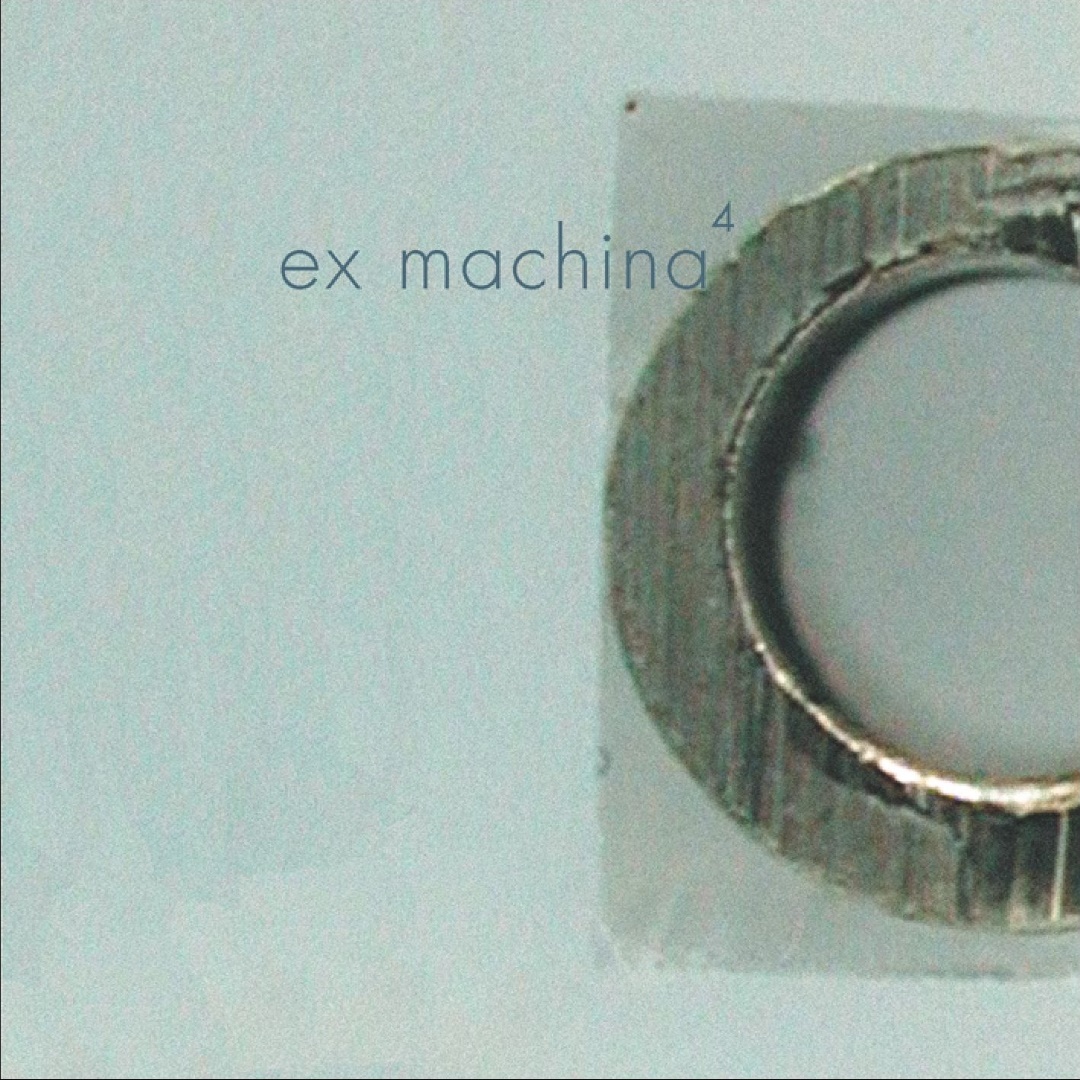
The 1970s stood entirely under the sign of a new “departure”. It was thus no accident that the first studio for live electronic music at a German conservatoire came into being precisely at the Folkwang-Hochschule Essen. Where could live electronic music have been made better than at a music academy with musicians of the first rank? It was also a time when people got to the bottom of “things in music”. Findings from the natural sciences were discussed in music as well. This form of musical reflection needed a place: the electronic studio. Activity therefore shifted from live electronic music towards work in the fixed studio. Alongside purely electronic sound generation, work with the material of the human voice stood at the centre of the composers’ musical interest. This explains why, on the EX MACHINA CD Vol. 4 “Die 70er Jahre”, speech material plays a significant role in three of the four compositions.
Cybele 960104 2001
16bit 44.1kHz Stereo New music Electroacoustic music Contemporary music 48:22
ex machina Vol. 4 – Die siebziger Jahre
Contributors
Verschiedene Interpreten
Composers
Dirk Reith · Hans-Werner Schneider · John McCaughey · Max E. Keller
Streaming & download
Short description
ex machina Vol. 4 – Die siebziger Jahre is devoted to wenn ich auf einem Instrument spiele…, Manche Lucias und Desdemonas … (1974-75), Sie für Tonband and Entwurf eines Programms by Schneider, Hans-Werner & McCaughey, John & Keller, Max E. & Reith, Dirk. Various performers shapes the recording with clear contour, a feeling for tone colour and an eye for the inner dramaturgy of the programme. Electroacoustic music shapes the album’s profile and makes the relations between form, gesture and space directly audible. A carefully produced Cybele edition that brings together repertoire, context and sonic presence.
Details
Hans-Werner Schneider, John McCaughey, Max E. Keller, Dirk Reith (electronic composition)
Booklet languages: German and English (32 pages)
Specifications
- Catalogue number
- Cybele 960104
- Year of release
- 2001
- Genre
- New music
- Period
- Electroacoustic music, Contemporary music
- Instrumentation
- Electroacoustic music
- Label
- Cybele Records
- Barcode
- 809548006129
- GTIN
- 4068992503592
- Booklet (pages)
- 32
Track listing
4 tracks · 48:22
- 01 wenn ich auf einem Instrument spiele… (1974) Composer: Hans-Werner Schneider (1953-) Performer: Hans-Werner Schneider 8:29
- 02 Manche Lucias und Desdemonas … (1974-75) Composer: John McCaughey (1948-) Performer: John McCaughey 9:57
- 03 Sie (1978) für Tonband Composer: Max E. Keller (1947-) Performers: Max E. Keller, Hans Suter 14:41
- 04 Entwurf eines Programms (1974) Composer: Dirk Reith (1947-) Performer: Dirk Reith 15:15