
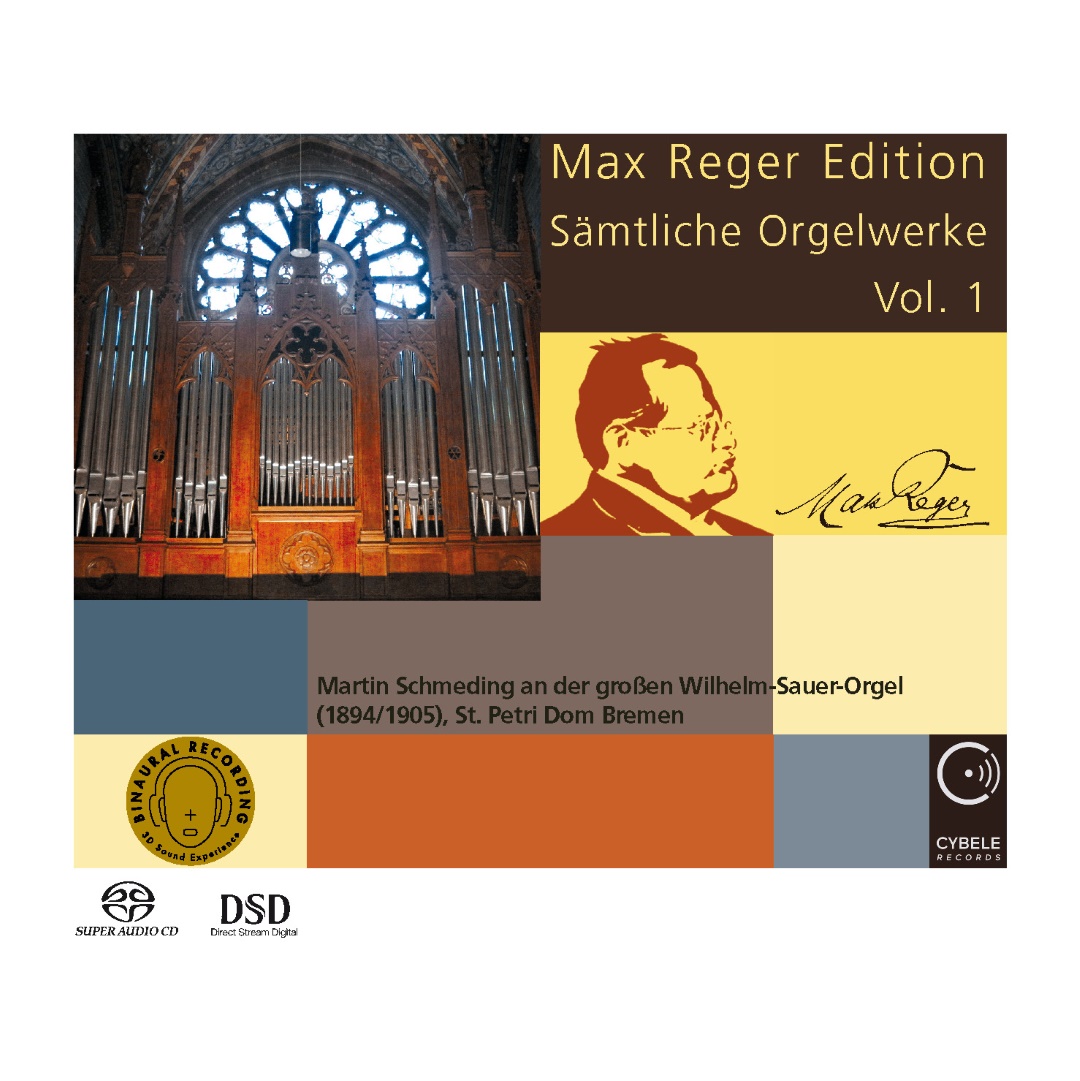
Cybele 3D-051501

Cybele 3D-051501 2015

3D binaural stereo 5.0 surround DSD Stereo Classical music Romantic music 1:21:40

To the description

Max Reger Edition. Sämtliche Orgelwerke (Vol. 1)

Contributors

Martin SchmedingOrganist

Composer

Max Reger

Short description

The first volume of the Max Reger Edition leads to the Wilhelm Sauer organ of 1894/1905 in Bremen Cathedral. Martin Schmeding joins the Phantasie und Fuge über B-A-C-H op. 46 to the Introduction und Passacaglia WoO IV/6, the Symphonische Phantasie und Fuge op. 57 and the Zweite Sonate op. 60. Between chromatic concentration, rapid changes of colour and the chorale in the Invocation, a wide expressive space opens up. The programme unites extended climaxes with fine internal movement; stereo, 5.0 surround and 3D binaural stereo draw in the space of the cathedral.

Details

Format
Hybrid-SACD

Resolution
DSD64 / 2.8224 MHz 1 bit

Total playing time
81:30

Channels
Stereo, 5.0 Surround, 3D-Binaural-Stereo

Performer and instrument
Martin Schmeding – Wilhelm Sauer organ (1894/1905), Bremen Cathedral

Programme
Phantasie und Fuge über B-A-C-H op. 46, Introduction und Passacaglia WoO IV/6, Symphonische Phantasie und Fuge op. 57 und Zweite Sonate op. 60

Awards

International Classical Music Awards (ICMA) — Nomination

Diapason — 5 Diapason of the Month

Specifications

Catalogue number
Cybele 3D-051501
Year of release
2015
Genre
Classical music
Period
Romantic music
Instrumentation
Organ
Label
Cybele Records
Barcode
809548015527
GTIN
4099885249662
Booklet (pages)
60

Track listing

9 tracks · 1:21:40

  1. 01 Fantasie und Fuge über B-A-C-H Op. 46 (1900) – Fantasie (Grave) Composer: Max Reger (1873-1916) Performer: Martin Schmeding 9:42
  2. 02 Fantasie und Fuge über B-A-C-H Op. 46 (1900) – Fuge (Sostenuto) Composer: Max Reger (1873-1916) Performer: Martin Schmeding 11:23
  3. 03 Introduction und Passacaglia in d-Moll WoO IV/6 (1899) – Introduction (Grave) Composer: Max Reger (1873-1916) Performer: Martin Schmeding 2:07
  4. 04 Introduction und Passacaglia in d-Moll WoO IV/6 (1899) – Passacaglia (Andante) Composer: Max Reger (1873-1916) Performer: Martin Schmeding 7:26
  5. 05 Symphonische Fantasie und Fuge Op. 57 (1901) – Fantasie (Vivacissimo ed agitato assai e molto espressivo) Composer: Max Reger (1873-1916) Performer: Martin Schmeding 12:58
  6. 06 Symphonische Fantasie und Fuge Op. 57 (1901) – Fuge (Allegro brillante e vivacissimo) Composer: Max Reger (1873-1916) Performer: Martin Schmeding 12:29
  7. 07 Zweite Sonate in d-Moll Op. 60 (1901) – I. Improvisation (Allegro con brio, ma non troppo vivace) Composer: Max Reger (1873-1916) Performer: Martin Schmeding 10:02
  8. 08 Zweite Sonate in d-Moll Op. 60 (1901) – II. Invocation (Grave con duolo, doch nicht schleppend) Composer: Max Reger (1873-1916) Performer: Martin Schmeding 7:29
  9. 09 Zweite Sonate in d-Moll Op. 60 (1901) – III. Introduction und Fuge (Allegro assai. Allegro energico) Composer: Max Reger (1873-1916) Performer: Martin Schmeding 8:04

Description

Four works written between 1899 and 1901 show how far Max Reger opens out the expressive possibilities of the organ. The first volume of the complete edition ranges from the concentrated layout of the Introduction und Passacaglia in d-Moll to the changing states of sound in the Symphonische Phantasie und Fuge. Martin Schmeding plays the large Wilhelm Sauer organ of Bremen Cathedral, whose four manuals and manifold stop combinations give this music a sonic foundation at once supple and load-bearing.

In the Phantasie und Fuge über B-A-C-H op. 46, the four notes are far more than a signature. Their chromatic tension sets harmonic and melodic developments in motion; the motif returns in changing shapes, gathers density and drives the climaxes forward. The calm, cantabile opening of the fugue is followed by a more animated subject in quavers. As the two subjects are combined and the tempo gradually quickens, the music grows back into the power of the opening chords.

The Introduction und Passacaglia WoO IV/6 gathers related forces into a smaller space. In the introduction, a lyrical passage in several parts interrupts the striking blocks of chords. The passacaglia then begins with the unaccompanied bass subject. Above its recurring course the movement thickens into octave runs and pedal trills: an unchanging point of departure carries a continually changing shape of sound.

The Symphonische Phantasie und Fuge op. 57 unfolds a different, more abrupt dramaturgy. Dante’s Inferno provided the impulse; no fixed plot is bound up with it. Short sections, abrupt changes of registration and great crescendos meet a slow middle section marked by chromatic sighing figures. Out of a lively main subject and a lyrical countersubject the fugue develops four clearly distinguished sections. Symphonic thinking thus takes shape within the contrapuntal form.

The Zweite Sonate in d-Moll op. 60 follows with a more strongly articulated layout. Behind the title Improvisation stands a first movement with contrasting subjects and their development. In the Invocation the cantabile solo voice leads through harmonic tensions and a great climax to the chorale Vom Himmel hoch. The finale joins a scherzo-like introduction to an energetic fugue.

The programme demands a long breath in the shaping of form and close attention to the individual voices and changes of colour. The Sauer organ, built in 1894 and enlarged in 1905, offers a spectrum for this that ranges from flute and string stops to powerful reeds. The DSD recording is available in stereo, 5.0 surround and as 3D binaural stereo for headphones. Alongside the movement within the writing, Bremen Cathedral thus becomes part of the listening as a resonating space.

Concert calendar

Cybele 3D-051501