
Cybele 140202 1999

16bit 44.1kHz Stereo Classical music Romantic music 1:03:21

To the description

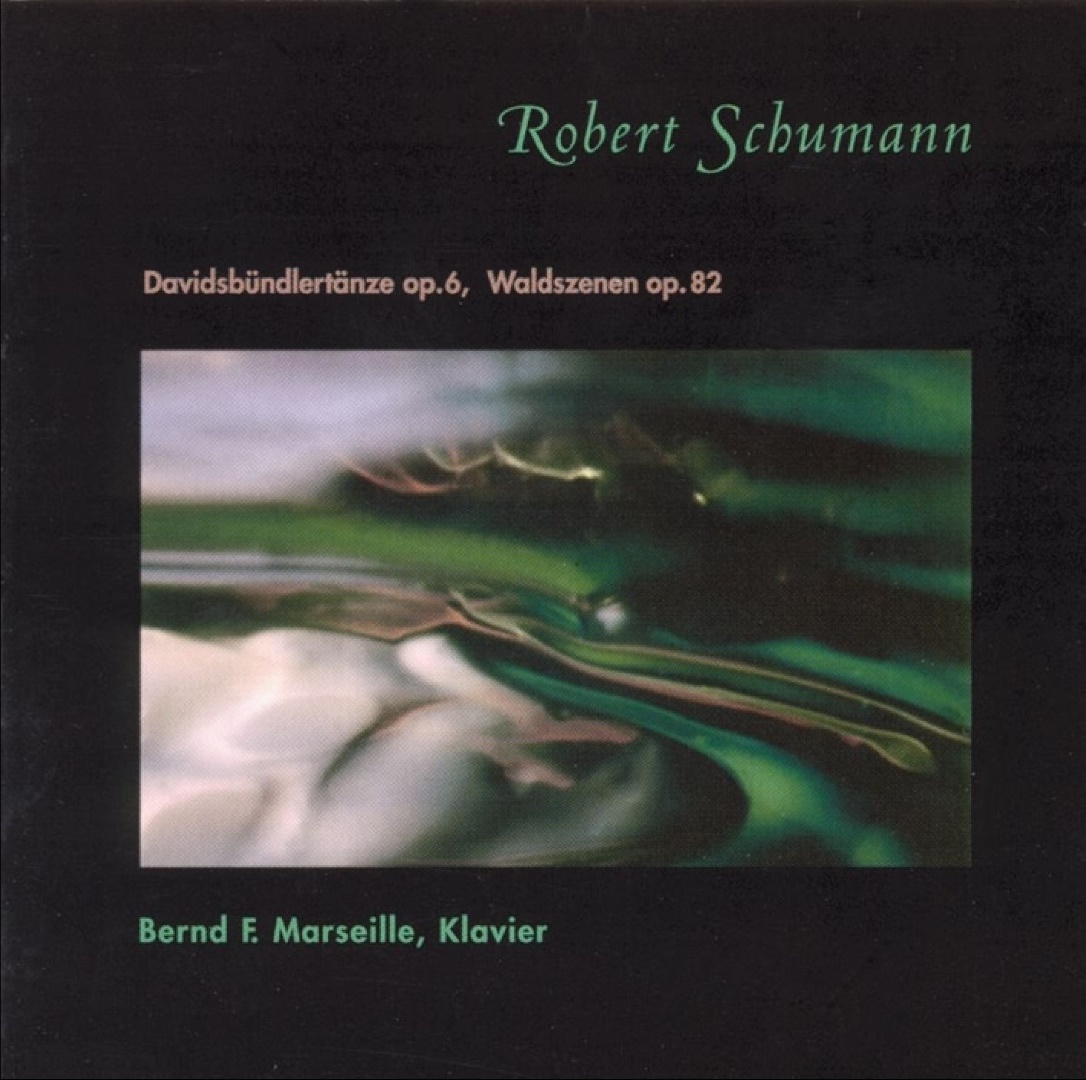
Robert Schumann: Davidsbündlertänze op. 6 and Waldszenen op. 82

Contributors

Bernd F. MarseillePiano

Composer

Robert Schumann

Short description

Robert Schumann was equally gifted as writer and musician, and both cycles on this recording show what that meant for his piano music. The Davidsbündlertänze Op. 6 were written in the summer of 1837, in the middle of his separation from Clara Wieck: they open with a motto taken from one of her mazurkas, and in the first edition each of the eighteen pieces ends with an “F.” or an “E.” for Schumann’s alter egos Florestan and Eusebius. He wrote the Forest Scenes Op. 82 eleven years later in Dresden, within a few days. Bernd F. Marseille plays both cycles on a Steinway D concert grand; the booklet text is by Christoph Iacono.

Details

Carrier format
CD

Resolution
PCM 44,1 kHz / 16 bit

Total playing time
63:21

Channels
Stereo

Instrument
Steinway D concert grand

Recording
2 October 1998 and 25/26 February 1999, Erholungshaus der Bayer AG, Leverkusen

Booklet
German, English and French, 32 pages

Recording Producer: Ingo Schmidt-Lucas

Press reviews

Specifications

Catalogue number
Cybele 140202
Year of release
1999
Genre
Classical music
Period
Romantic music
Instrumentation
Piano
Label
Cybele Records
Barcode
809548003920
GTIN
4068992491127
Booklet (pages)
32

Track listing

27 tracks · 1:03:21

  1. 01 Davidsbündlertänze Op. 6, Book I – Lively Composer: Robert Schumann (1810-1856) Performer: Bernd F. Marseille 1:39
  2. 02 Davidsbündlertänze Op. 6, Book I – Heartfelt Composer: Robert Schumann (1810-1856) Performer: Bernd F. Marseille 1:54
  3. 03 Davidsbündlertänze Op. 6, Book I – With humour Composer: Robert Schumann (1810-1856) Performer: Bernd F. Marseille 1:26
  4. 04 Davidsbündlertänze Op. 6, Book I – Impatient Composer: Robert Schumann (1810-1856) Performer: Bernd F. Marseille 0:55
  5. 05 Davidsbündlertänze Op. 6, Book I – Simple Composer: Robert Schumann (1810-1856) Performer: Bernd F. Marseille 2:47
  6. 06 Davidsbündlertänze Op. 6, Book I – Very fast Composer: Robert Schumann (1810-1856) Performer: Bernd F. Marseille 1:51
  7. 07 Davidsbündlertänze Op. 6, Book I – Not fast Composer: Robert Schumann (1810-1856) Performer: Bernd F. Marseille 3:39
  8. 08 Davidsbündlertänze Op. 6, Book I – Brisk Composer: Robert Schumann (1810-1856) Performer: Bernd F. Marseille 1:02
  9. 09 Davidsbündlertänze Op. 6, Book I – Lively Composer: Robert Schumann (1810-1856) Performer: Bernd F. Marseille 1:04
  10. 10 Davidsbündlertänze Op. 6, Book II – In the manner of a ballade. Very fast Composer: Robert Schumann (1810-1856) Performer: Bernd F. Marseille 1:35
  11. 11 Davidsbündlertänze Op. 6, Book II – Simple Composer: Robert Schumann (1810-1856) Performer: Bernd F. Marseille 2:12
  12. 12 Davidsbündlertänze Op. 6, Book II – With humour Composer: Robert Schumann (1810-1856) Performer: Bernd F. Marseille 0:44
  13. 13 Davidsbündlertänze Op. 6, Book II – Wild and merry Composer: Robert Schumann (1810-1856) Performer: Bernd F. Marseille 3:25
  14. 14 Davidsbündlertänze Op. 6, Book II – Tender and singing Composer: Robert Schumann (1810-1856) Performer: Bernd F. Marseille 3:12
  15. 15 Davidsbündlertänze Op. 6, Book II – Brisk Composer: Robert Schumann (1810-1856) Performer: Bernd F. Marseille 1:56
  16. 16 Davidsbündlertänze Op. 6, Book II – With good humour Composer: Robert Schumann (1810-1856) Performer: Bernd F. Marseille 1:34
  17. 17 Davidsbündlertänze Op. 6, Book II – As if from afar Composer: Robert Schumann (1810-1856) Performer: Bernd F. Marseille 4:41
  18. 18 Davidsbündlertänze Op. 6, Book II – Not fast Composer: Robert Schumann (1810-1856) Performer: Bernd F. Marseille 2:38
  19. 19 Forest Scenes Op. 82 – Entrance Composer: Robert Schumann (1810-1856) Performer: Bernd F. Marseille 2:39
  20. 20 Forest Scenes Op. 82 – Hunter in Ambush Composer: Robert Schumann (1810-1856) Performer: Bernd F. Marseille 1:32
  21. 21 Forest Scenes Op. 82 – Lonely Flowers Composer: Robert Schumann (1810-1856) Performer: Bernd F. Marseille 3:03
  22. 22 Forest Scenes Op. 82 – Haunted Spot Composer: Robert Schumann (1810-1856) Performer: Bernd F. Marseille 3:40
  23. 23 Forest Scenes Op. 82 – Friendly Landscape Composer: Robert Schumann (1810-1856) Performer: Bernd F. Marseille 1:13
  24. 24 Forest Scenes Op. 82 – Wayside Inn Composer: Robert Schumann (1810-1856) Performer: Bernd F. Marseille 2:04
  25. 25 Forest Scenes Op. 82 – Bird as Prophet Composer: Robert Schumann (1810-1856) Performer: Bernd F. Marseille 4:37
  26. 26 Forest Scenes Op. 82 – Hunting Song Composer: Robert Schumann (1810-1856) Performer: Bernd F. Marseille 2:33
  27. 27 Forest Scenes Op. 82 – Farewell Composer: Robert Schumann (1810-1856) Performer: Bernd F. Marseille 3:46

Description

Like no other composer of his time Robert Schumann embodies the image of the romantic genius, and in few others does the ambivalence of Romanticism run so continuously through life and work. Doubly gifted as writer and musician, the bookseller’s son was long undecided which of the two paths should be his own; his early models lay in literature — he admired Byron, Goethe and Schiller, but the writer he loved was Jean Paul, whose style marked the first attempts of the young author. In the booklet Christoph Iacono describes how Schumann’s work slips away from the reality of a concrete world from the very start in order to find itself again in the fiction of an ideal existence: in the romantic sense music is the most poetic of all the arts, and for Schumann all poetry is at the same time musical in character.

The construct of the double, which Schumann found in Jean Paul, answers directly to this way of thinking: the figures Walt and Vult from the “Flegeljahre” correspond to Florestan, the combative and impetuous character, and Eusebius, the gentle figure lost in his dreams, between whom Meister Raro — to be read as Friedrich Wieck — takes the deliberating position. The same inclination to invent figures and set them up as personifications of the self gave rise to the Davidsbund, a spiritual brotherhood and conspiracy against philistinism, akin to E. T. A. Hoffmann’s Serapion Brethren. Besides Florestan, Eusebius and Meister Raro it included Schumann’s Leipzig friends from the Kaffeebaum, historical figures such as Bach, Mozart, Beethoven, Berlioz and Chopin, and women’s names such as Chiarina and Zilia, both of which stand for Clara. It was in this circle that the “Neue Zeitschrift für Musik”, founded in 1834 by Schumann, Wieck, Schuncke and Knorr, first appeared; Schumann soon took over the editorship alone and kept it until he left Leipzig in 1844.

The Davidsbündlertänze Op. 6 arose in this context: sketched between 1834 and 1836, composed in the summer of 1837 and published in Leipzig around the turn of the year 1837/38. In the first edition each of the nine pieces of both books ends with an “F.” or an “E.”, at times with “F. und E.” — a pointer to the two characters that Schumann removed again in the revised version of 1850/51, in a characteristically de-romanticising manner. The opening bars already show the connection with Clara Wieck: as a “motto by C. W.” they quote the beginning of her Mazurka Op. 6 No. 5 from the Soirées musicales. On 13 August 1837, a month before her eighteenth birthday, Clara had played Schumann’s Etudes Symphoniques Op. 13 in public in Leipzig — the very work originally to have been called “Zwölf Davidsbündleretüden”; a few days later she confirmed their secret engagement by letter.

“I dedicate these pages to you”, Schumann wrote to Clara on 7 October 1837; in his diary he noted that he had composed with a bliss such as he had never known. At the same time he placed at the head of the work a proverb mirroring his inner division: in every age, pleasure and sorrow are bound together. The first book closes with a self-commentary — “Hierauf schloß Florestan und es zuckte ihm schmerzlich um die Lippen” — and the last piece is prefaced by the remark that Eusebius, quite superfluously, added the following, though much bliss spoke from his eyes. Both closing sections end in C major, Clara’s key, around which the work otherwise only circles without touching it; at the end a sonorous C strikes twelve times, midnight strokes or wedding bells, while the opening theme sounds once more as if from afar in the deepest register. In another letter Schumann called the dances full of wedding thoughts: the whole story, he wrote, is one long wedding eve.

After 1840, the year of his marriage, Schumann turned to other genres; only the Album für die Jugend Op. 68 of August and September 1848 resumed his work on piano literature. He composed the Forest Scenes Op. 82 in Dresden between 29 December 1848 and 6 January 1849. Their poetic idea is expressed in the titles of the nine pieces, from “Entrance” to “Farewell”, but serves only as a distantly guiding thought and the snapshot of a fleeting mood. Schumann’s household book shows that three further pieces were planned, “Vorüberfliegendes Wild”, “Fernes Getöse” and “Waldbach”; that he dropped precisely these, Iacono suggests, indicates that he wanted to avoid an extended surface of tone painting. The recording was made on 2 October 1998 and on 25 and 26 February 1999 in the Erholungshaus of Bayer AG in Leverkusen.