
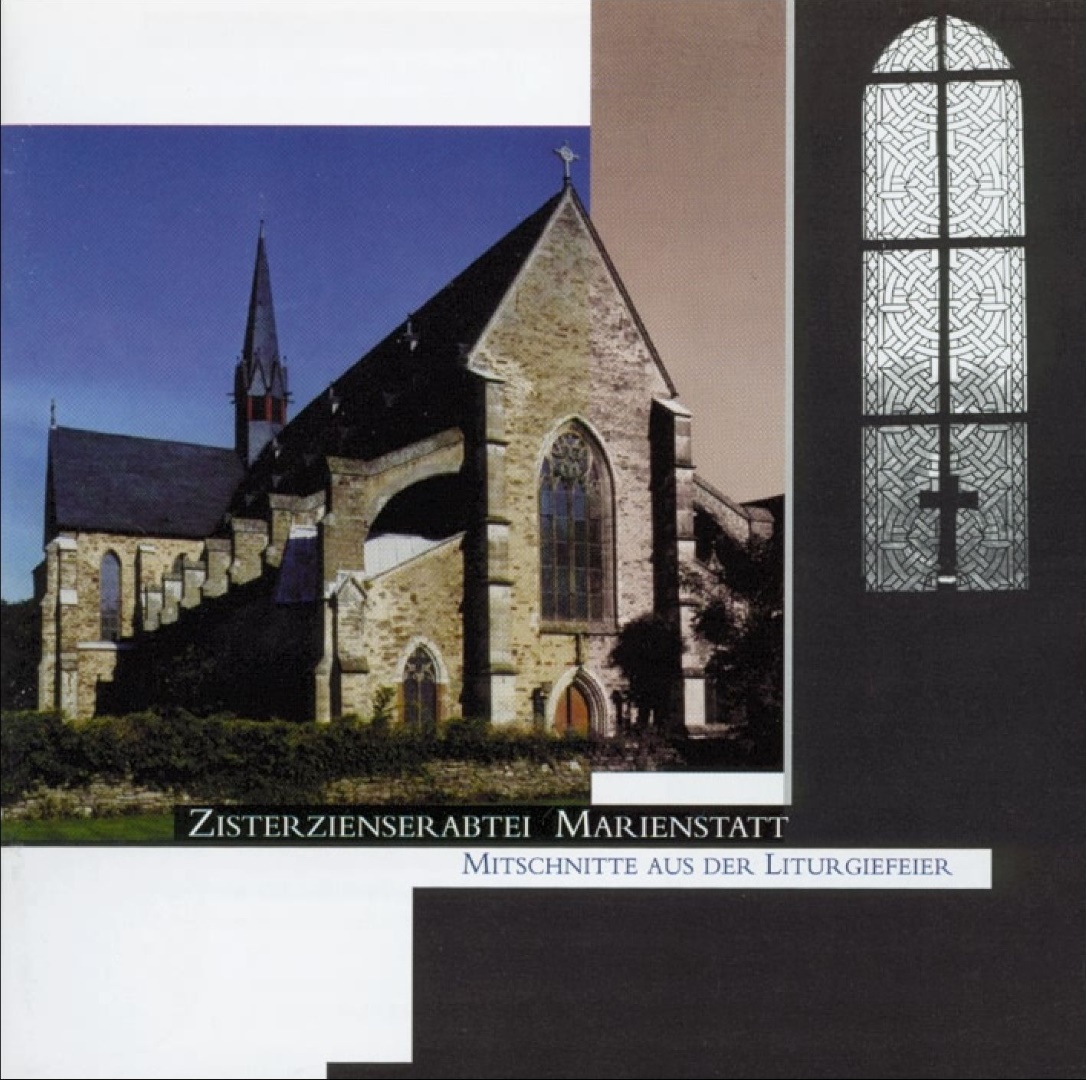
This CD transports you into the basilica of Marienstatt Abbey. You hear live recordings of the monks at the Divine Office. That this CD presents precisely the chants and texts of the two solemnities of the Assumption of the Virgin (15 August) and of the father of the Cistercian order, Bernard of Clairvaux (20 August), underlines the outstanding importance of these two feasts for the Cistercians: Mary as patroness of the order and of Marienstatt Abbey – Bernard as the spiritual father of the Cistercian order, who shaped its spirituality, that is, the practice of the monastic life of both the communities and the individual monks, more than anyone. The chants and texts of these two feasts also present what is distinctively Cistercian particularly well. The Cistercian order The Benedictine reform movement of the Cistercians, which sought to return the life of the order to a strict observance of the Rule of St. Benedict, has its origin in the founding of the mother house of Cîteaux (Lat. Cistercium – hence the name »Cistercians«) in Burgundy. There, in 1098, Abbot Robert of Molesme (c. 1027-1111) settled in the wilderness together with 21 monks. In 1188 a group of monks moved from Himmerod, a monastery founded in Germany by Bernard himself, to the Rhine and founded the monastery of Heisterbach in the Siebengebirge. From there, in 1215, monks went to found a monastery at Marienstatt, while as early as 1212 a few monks had settled, as forerunners, at what is today the »Altenkloster«. In 1222 Count Heinrich von Sayn transferred the manor of Nistria to the monastery. Five years later the community was able to move to the new site at Marienstatt. Presumably the buildings most essential to a monastery, including the church (apse and chancel), had been built far enough for life according to the Rule to be possible. Around 1910 it was decided to establish a private school, a so-called Oblate school closely attached to the monastery. Over time this became the abbey’s private grammar school, which today teaches around 800 pupils. In recent years the community has consisted of some 25 monks between the ages of 20 and 80, half of them not yet past their fiftieth year.
Zisterzienserabtei Marienstatt – Mitschnitte aus der Liturgiefeier
Contributors
Fr. Gregor BrandtFr. Jakob SchwindeSchola der Mönche der Abtei Marienstatt
Composer
Gregorianik
Streaming & download
Short description
Zisterzienserabtei Marienstatt – Mitschnitte aus der Liturgiefeier presents a carefully assembled programme of Gregorian chant. Fr. Gregor Brandt, Fr. Jakob Schwinde, Schola of the monks of Marienstatt Abbey shapes the recording with clear contour, a feeling for tone colour and an eye for the inner dramaturgy of the programme. Ensemble shapes the album’s profile and makes the relations between form, gesture and space directly audible. A carefully produced Cybele edition that brings together repertoire, context and sonic presence.
Details
Fr. Gregor Brandt (organ) – Fr. Jakob Schwinde (flute) – Schola of the monks of Marienstatt Abbey (Gregorian chant, plainsong)
Recording Producer: Ingo Schmidt-Lucas
Booklet language: German (32 pages)
Specifications
- Catalogue number
- Undine 51009715
- Year of release
- 1997
- Genre
- Classical music
- Period
- Medieval music
- Instrumentation
- Ensemble, Vocal and choral music
- Label
- Undine
- Barcode
- 4040961000196
- GTIN
- 4068992503837
- Booklet (pages)
- 32