
“Words? Music? No, it’s what’s behind.” Saskia Reither opens her foreword with this sentence by James Joyce. Conceptual language and music, which is tied to no object, challenge one another; the field of tension ranges from the musical grasp of word meaning via the processing of speech samples to the internalised “speaking” of a world of sound. What matters is no longer the precedence of one art over the other, but what arises in the space between word and sound.
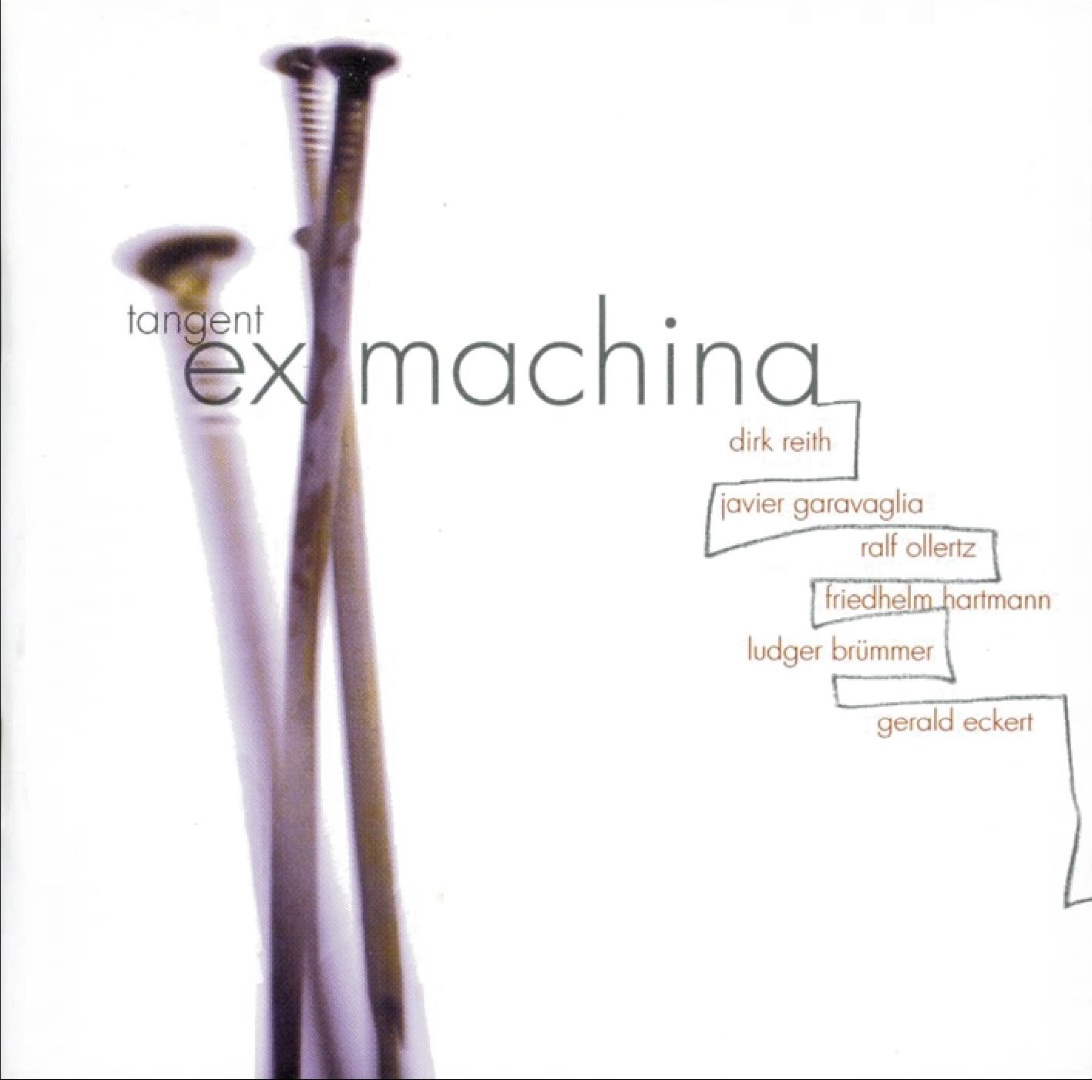
“verSTIMMUNG” is a four-track composition whose sounds, apart from one short sequence, are derived entirely from speech. The underlying poem by Angelika Janz, spoken by Patrick Hagen, provides both the sound repertoire and the structure of the whole form; in the course of the piece the material regains a voice and becomes language again. The piece was selected for the ICMC 1996 in Hong Kong. Javier Alejandro Garavaglia bases “Arte poética (I)” on the first stanza of Borges’ poem and highlights the words for river and water, time and remembering, and for looking; in the first of its two four-minute parts the element of water leads, in the second time. It is the first of a planned series of seven pieces, produced at the ICEM with Csound, Common Music, an Akai sampler and ProTools.
In “Cral’une”, which the booklet accompanies with a text by Toula Limnaios, Ralf R. Ollertz takes up the voice as gesture: the material refers to no poetic model but integrates sequences from an authentic gramophone recording of a singing voice, into which Ollertz does not intervene. Friedhelm H. Hartmann, by contrast, modifies his material. His seven-part cycle “Portraits of a woman” is based on a few speech samples, synthesised with Csound and formulated in his own algorithmic language Celsyus; in the two parts, a closely woven three-part web of voices forms a band of sound whose inner movement is governed by Markov processes, while extended filtering relates to a short excerpt of an invented language.
Ludger Brümmer’s “Dele!”, commissioned by the Akademie der Künste in Berlin and composed in its electronic studio, starts from two short samples of shouting and playing children, which are filtered, transposed and stretched with the phase vocoder until their origin can no longer be recognised. Long volume ramps culminate in accents in which more than twelve sound structures alternate within a fraction of a second. Gerald Eckert understands the title “Diaphane”, translucent, as a concept: a complex layer of sound is overlaid by layers of a different kind, like a surface in light refracted by a prism. The concrete material of percussion, speech and machine sounds was processed digitally, and the sound structures were created with Csound.