
When Günther Becker gave his composition for bassoon and ensemble the title Hard Times — Multisounds, he was probably not thinking directly of the awkward situation of new music — he is after all one of those who fight for it. The adoption of Charles Dickens’s novel title stands rather, in retrospect, for his own chequered biography and commemorates his long friendship with the Korean composer Isang Yun, who had to spend years in detention and under torture: in 1943 in the prisons of the Japanese occupiers, and from 1967 to 1969 in the cells of the South Korean secret service, to which he had been abducted from Berlin on a supposed charge of spying for North Korea; after international protests he was released and went on living in Germany.
The dedication to Yun shows itself in the choice of solo instrument: as a member of the oboe family the bassoon stands for the traditional Korean oboe piri — also the title of a piece by Yun of 1971 — and the multiphonics demanded of the bassoon, established in Europe for barely two decades at that point, have long belonged to the playing of Asian wind instruments. The basic material comes from the piece Sphinxes in Robert Schumann’s Carnaval Op. 9, in which Schumann deliberately chose notes whose names reveal an inner programme and point to Asch in Bohemia, the home of his first fiancée Ernestine von Fricken. Becker transfers these givens into the language of the twentieth century and extends them into a twelve-note row.
Historical reference also marks Stravaganza for solo violin of 1986: Carlo Farina, a pupil of Monteverdi and one of the most virtuoso violinists of his time, had gathered in his Capriccio stravagante of 1626 all the manners of playing that were then possible and new on the violin — Becker undertakes a compilation of the same ambition here. Rigolo of 1966, for high voice, five instruments and tape, points to Verdi’s Rigoletto, yet it means not that stage work but the institution of Italian opera in general, and in particular the cult of the prima donna, which Becker sets to music in ironic earnest.
The hysteria of the laughing and weeping soprano is commented on by various fully composed kinds of laughter from the tape — joy, malice, mockery. At the close the prima donna goes under in a monotonous fortissimo of all the instruments, which the conductor abruptly breaks off: the singer suddenly seems to stand quite alone. Epiklesis Alpha of 1976 for chamber ensemble and tape means “first invocation”, though what is meant is not the Orthodox liturgical invocation of the Holy Spirit but the original unity of music and the mystical knowledge of the unnameable God. Free of extra-musical reference are the Mikrographien of 1973 for piano, in whose four extremely concise pieces the densest fields of events confront one another, and Game for nine of 1962, at the centre of which stands playing with the instruments and among them: border regions of playing technique are explored and combined in order to loosen what is conventional.
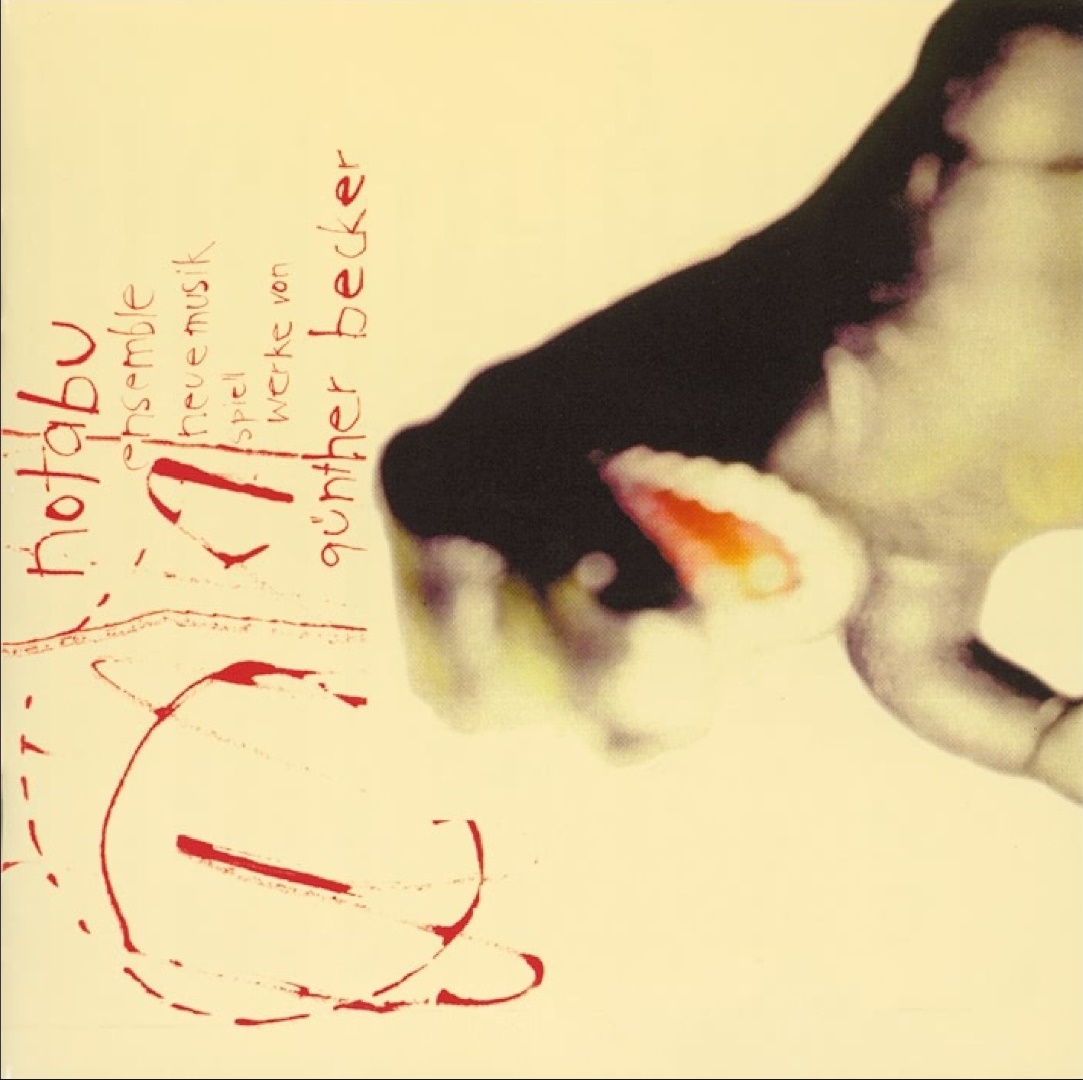
The notabu.ensemble neue musik came into being in 1983 as an initiative of music students at the Robert Schumann Hochschule in Düsseldorf. A close and friendly relationship with Günther Becker, who gave the group substantial support, developed in its earliest years; invitations to the ensembletta in Mönchengladbach, the Rheinisches Musikfest, the Braunschweig Days for New Music and the Academy of Arts in Berlin followed, and since 1988 the ensemble has appeared regularly in concerts of the Düsseldorf Symphony. The recording was made between February and June 1996 in the Forum Niederberg in Velbert; the CD runs to 73:49.