
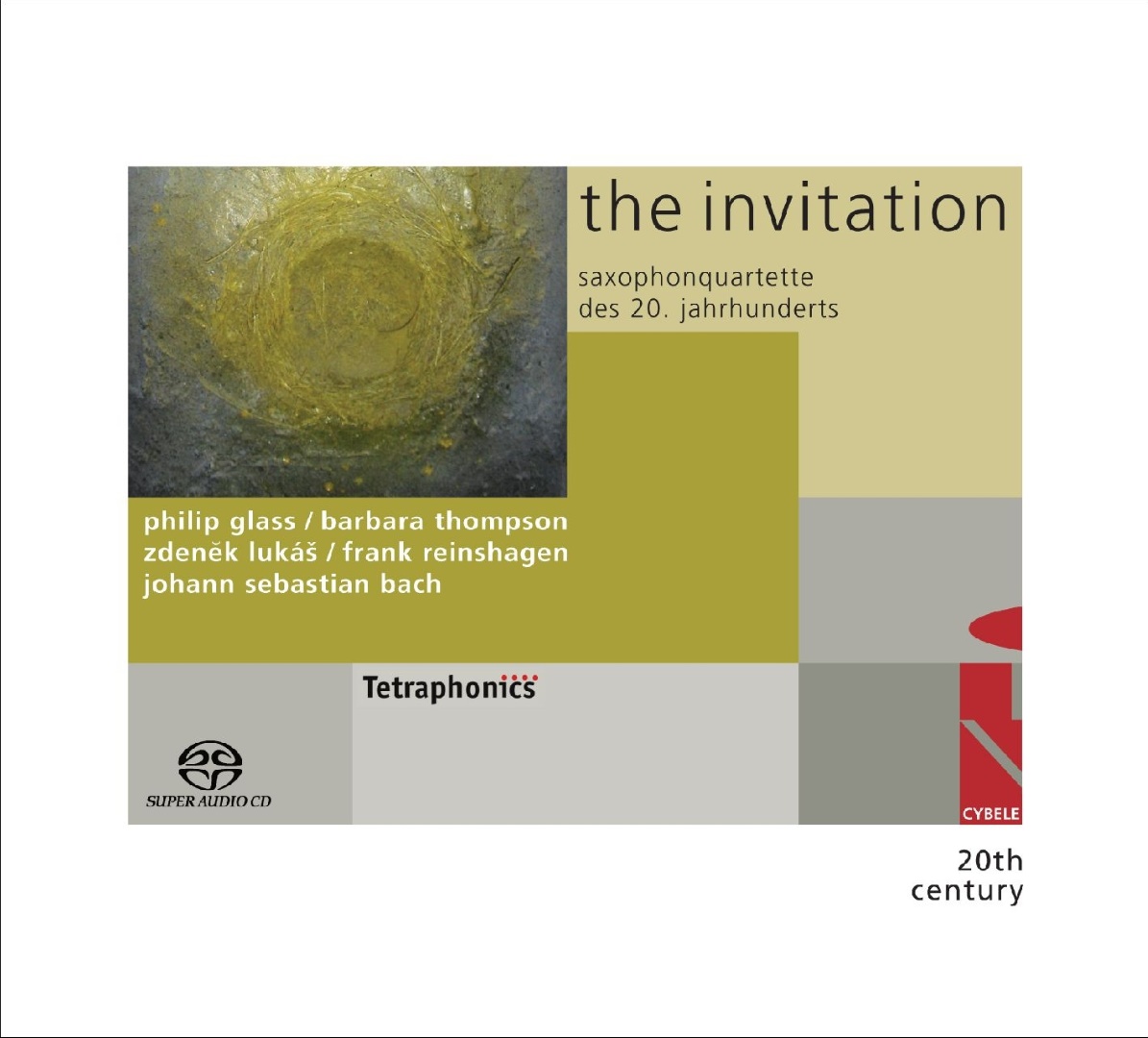
The Invitation – saxophone quartets by Glass, Reinshagen, Thompson, Lukáš and Bach. Tetraphonics presents the saxophone quartet between minimal music, an affinity with jazz, central European modernism and baroque polyphony. The four instruments merge into a homogeneous organism while moving between soloistic profile, pulsing energy and chamber-musical transparency.
The booklet opens up the historical and aesthetic context of the programme. Works and arrangements are seen not in isolation but as part of a living history of performance and reception. This makes the decisions about scoring, instruments and order easy to follow.
Tetraphonics saxophone quartet shapes the music with clear voice leading, supple articulation and a pronounced feeling for tone colour. Lyrical passages keep their calm and breath, rhythmically pointed sections their energy. Even in dense textures, motifs, counter-voices and formal transitions remain transparent.
The scoring – Saxophone quartet – is an essential part of the statement. Resonance, registration, touch or bowing technique and the acoustics of each space all help to shape the dramaturgy. The production preserves these differences and makes both the finest gradations and the great dynamic arcs audible.
The album follows no mere chronology but a deliberately constructed logic of listening. Contrasts between periods, types of work and instrumental colours sharpen the profile of the individual pieces, while recurring gestures and related formal ideas hold them together. What emerges is a coherent portrait rather than a chance collection.
For connoisseurs, The Invitation – Saxophonquartette des 20. Jahrhunderts offers a wealth of detail in compositional technique, interpretation and sound. At the same time the way in remains direct: speaking motifs, characteristic rhythms and incisive colours lead through the programme. The booklet deepens this listening experience without anticipating it.
Artistic conception and recording technique thus interlock. The result documents not only repertoire but shows how historical knowledge, interpretative imagination and careful sound direction complement one another. It is precisely this combination that gives the production its unmistakable label profile.