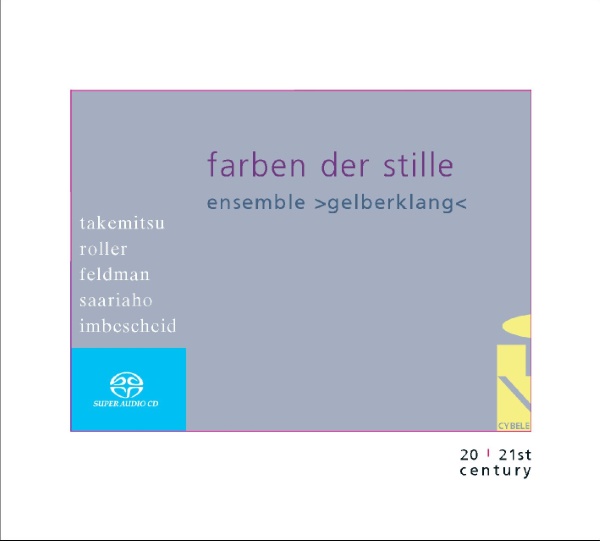
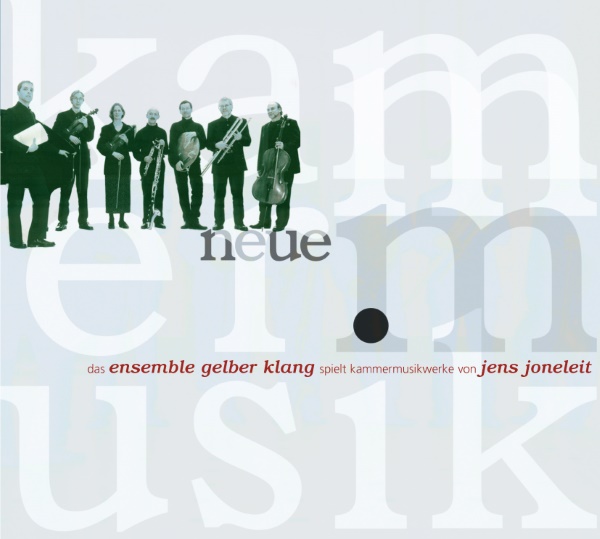
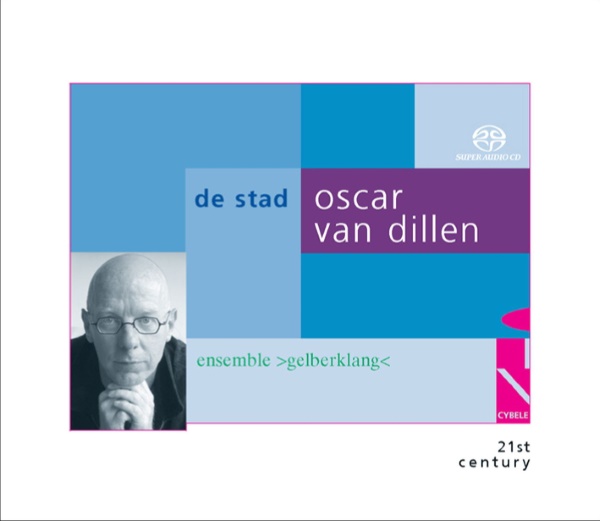
Stuttgart ensemble for contemporary chamber music; directed by the violinist Ulrike Stortz. From 1992 it devoted itself to the interpretation of contemporary chamber music, in its first years with concerts in Germany, Italy and Switzerland and with radio recordings under the name “Ensemble 20”. Its members included Albrecht Imbescheid (flute), Thomas Reil (clarinet), Michael Kiedaisch (percussion), Maria Stange (harp), Martin Stortz and Jürgen Kruse (piano), Axel Porath (viola) and Scott Roller (cello). Its core line-up of flute, clarinet, violin, viola, cello, piano, harp and percussion was also the basis of works with smaller or larger scoring, which it usually played without a conductor. From 1996 it increasingly sought links with the other arts; this gave rise to its name, after Wassily Kandinsky’s stage project “Der gelbe Klang” of 1912. It devised programmes for exhibitions at the Staatsgalerie Stuttgart and the Kunstsammlung Chemnitz (Richard Serra), the Fondation Beyeler Basel (Mark Rothko) and the Städtische Galerie Esslingen (three Zero exhibitions). In 1997/98 its members took part as composers, players and performers in the dance performance “Das Rauschen der blauen Tür” with the choreographer Sven Sören Beyer and the trombonist Michael Svoboda, which was given in numerous performances between Stuttgart and Berlin; with the mezzo-soprano Christina Ascher it developed a Paul Celan programme. For six years it was ensemble in residence at the workshop week of the prizewinners of the “Jugend komponiert” competition. Works for the ensemble were written by Braxton Blake, Jens Joneleit and Andreas Pflüger, among others, and by its members Albrecht Imbescheid and Scott Roller. In 2001/02 a programme for string quartet and live electronics came into being, out of which the HELIOS Quartett emerged, the ensemble’s strings with the live electronics musician Bryan Wolf; it performed in Germany and England. Three albums connect the ensemble with Cybele, all recorded between 2001 and 2003 at the Theater an der Halle in Ostfildern-Nellingen. New Chamber Music: Works by Jens Joneleit (2002) gathers five chamber works from the years 1998 to 2001; Colours of Silence (2003) places works by Takemitsu, Roller, Feldman, Saariaho and Imbescheid side by side with live electronics; Oscar van Dillen: de Stad (2003) contains the ensemble version and the electroacoustic montage “Stadsgeschiedenis” for the Historical Museum Rotterdam, both conceived as surround compositions.
Ensemble gelberklang
Ensemble