
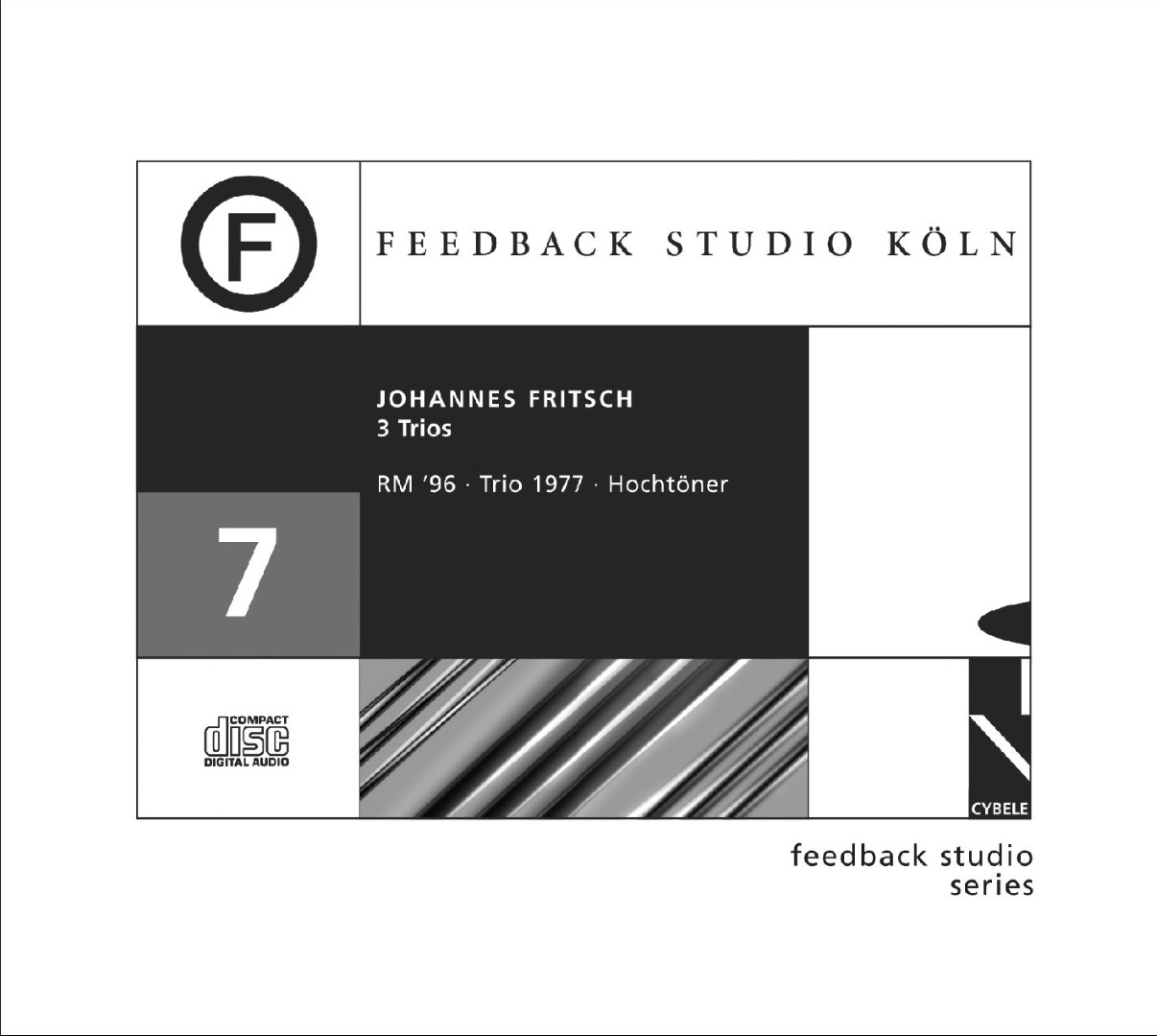
Feedback Studio Köln Vol. 7 – Johannes Fritsch: 3 Trios places RM ’96, Trio 1977 and Hochtöner at the centre. The programme is laid out not as a loose sequence but as an audibly articulated whole: different pieces, textures and states of sound enter into relation with one another and give the album a profile of its own.
The selection belongs to the field of New music; stylistically it leads into Contemporary music, electroacoustic music. Fritsch, Johannes is the decisive point of reference here. The booklet opens up the genesis of the works, their aesthetic premises and the connections between them, without reducing the music to mere commentary. Historical layers, formal ideas and personal spaces of expression remain present as an audible experience.
The scoring – Electroacoustic music, chamber music – is essential to what this production has to say. Stops, articulation, resonance and silence are treated as shaping forces. Where lines overlap, rhythmic impulses gather or tone colours merge into one another, the recording preserves transparency while letting the physical presence of the instruments and voices be felt.
Various performers joins interpretative precision to a natural musical breath. The playing follows the character of each individual work while keeping the long line in view: fragile moments retain their tension, virtuoso passages remain intelligible, and the transitions between repose, movement and concentration acquire a convincing inner logic.
The technical realisation supports this kind of listening without overstating the effect. CD allows a finely graded presentation of dynamics, space and tone colour; the total playing time of 45:22 is deliberately proportioned. Individual voices, ensemble balance and reverberation are thus not merely documented but become experienceable as part of the musical architecture.
As is typical of Cybele, this edition combines careful work on repertoire, editorial context and attentive sound direction. It addresses curious listeners as much as connoisseurs: the immediate musical impression remains central, while repeated listening opens up further connections, details and perspectives.