
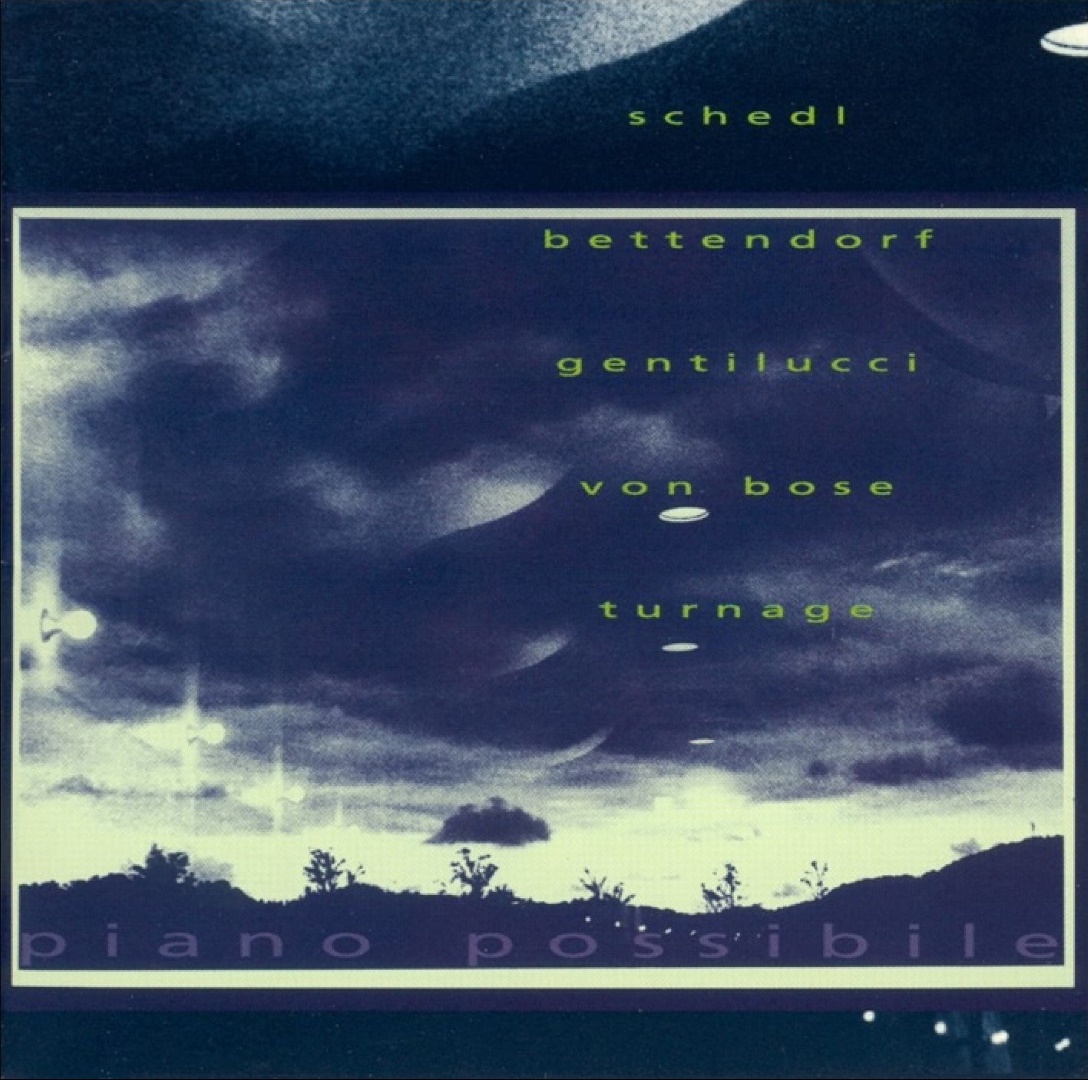
Cybele 360501 2000

16bit 44.1kHz Stereo New music Contemporary music 1:01:27

To the description

piano possibile

Contributors

piano possibile – ensemble für neue musikChristian Günther

Composers

Armando Gentilucci · Carl Christian von Bettendorf · Hans-Jürgen von Bose · Klaus Schedl · Mark-Anthony Turnage

Short description

piano possibile is devoted to Running Man (1997-99) für Ensemble, Nachtstück und Arie (1998-99) für Sopran und Ensemble in fünf Gruppen, Text von Ingeborg Bachmann, In alto, le stelle für neun Instrumente, Befragung für Klarinette und Streicher and On All Fours für Kammerensemble by Turnage, Mark-Anthony & Bose, Hans-Jürgen von & Gentilucci, Armando & Schedl, Klaus & Bettendorf, Carl Christian von. piano possibile ensemble für neue musik, Christian Günther gestaltet die Einspielung mit klarer Kontur, Sinn für klangliche Farbe und einem Blick für die innere Dramaturgie des Programms. Piano, chamber ensemble shape the album’s profile and make the relations between form, gesture and space directly audible. A carefully…

Details

Format
CD

Resolution
PCM 44,1 kHz / 16 Bit

Total playing time
61:27

Channels
Stereo

Scoring
Piano, chamber ensemble

Performers
piano possibile ensemble für neue musik, Christian Günther

Programme
piano possibile – Kammermusik von Mark-Anthony Turnage, Hans-Jürgen von Bose, Armando Gentilucci, Klaus Schedl und Carl Christian von Bettendorf

Specifications

Catalogue number
Cybele 360501
Year of release
2000
Genre
New music
Period
Contemporary music
Instrumentation
Chamber ensemble, Piano
Label
Cybele Records
Barcode
809548004828
GTIN
4068992494609
Booklet (pages)
32

Track listing

5 tracks · 1:01:27

  1. 01 Running Man (1997-99) für Ensemble Composer: Klaus Schedl (1966-) Performers: piano possibile, Christian Günther 11:37
  2. 02 Nachtstück und Arie (1998-99) für Sopran und Ensemble in fünf Gruppen, Text von Ingeborg Bachmann Composer: Carl Christian Bettendorf (1973-) Performers: piano possibile, Christian Günther 13:00
  3. 03 In alto, le stelle (1981) für neun Instrumente Composer: Armando Gentilucci (1939-1989) Performers: piano possibile, Christian Günther 10:00
  4. 04 Befragung (1988) für Klarinette und Streicher Composer: Hans-Jürgen von Bose (1953-) Performers: piano possibile, Christian Günther 13:18
  5. 05 On All Fours (1985) für Kammerensemble Composer: Mark-Anthony Turnage (1960-) Performers: piano possibile, Christian Günther 13:32

Description

piano possibile – chamber music by Mark-Anthony Turnage, Hans-Jürgen von Bose, Armando Gentilucci, Klaus Schedl and Carl Christian von Bettendorf. The ensemble piano possibile presents five orchestral pieces in chamber scoring, in which the piano acts as motor, resonating body and partner to changing groups of instruments. Expressive gestures, precise layering and widely differing European positions form a concentrated panorama of new music.

The extensive booklet places the works in their biographical, historical and aesthetic context. It shows the traditions from which the music springs and how it carries existing forms, genres and ways of playing further. The order of the programme makes these relations audible without levelling out the individuality of the single pieces.

piano possibile ensemble für neue musik, Christian Günther shapes the repertoire with clear voice leading, precise articulation and a pronounced feeling for tone colour. Quiet, fragile passages keep their tension; rhythmically pointed or densely written sections remain transparent. The interpretation joins analytical care to a natural musical breath.

The scoring – Piano, chamber ensemble – is part of the compositional statement. Registration, resonances, breath, bowing or touch and, where present, electronic layers all help to shape the course of the music. The recording preserves these differences and lets the interplay of individual voice, ensemble and space be followed directly.

The album is built dramaturgically as a continuous sequence for listening. Contrasts between creative periods, textures and instrumental colours sharpen the profile; recurring gestures, related formal ideas and sonic transitions create connection. What emerges is a many-layered portrait rather than a mere succession of pieces.

Even without prior knowledge of music history, piano possibile offers a direct way in. Incisive motifs, characteristic rhythms, speaking lines and carefully placed rests lead through the music. Listen more closely and a dense web of references, transformations and interpretative decisions comes into view.

Booklet, artistic conception and recording technique combine into a typical Cybele production: repertoire off the beaten track is presented with expertise, in high sonic quality and without promotional overstatement. The presentation thus remains informative and gives the label its profile, while the music itself stays at the centre.