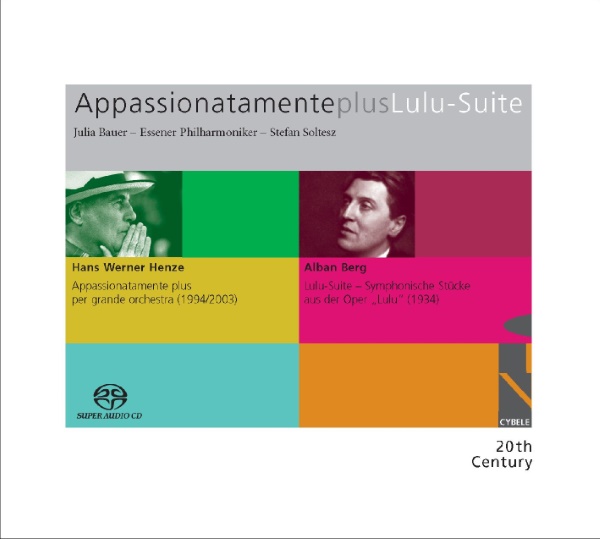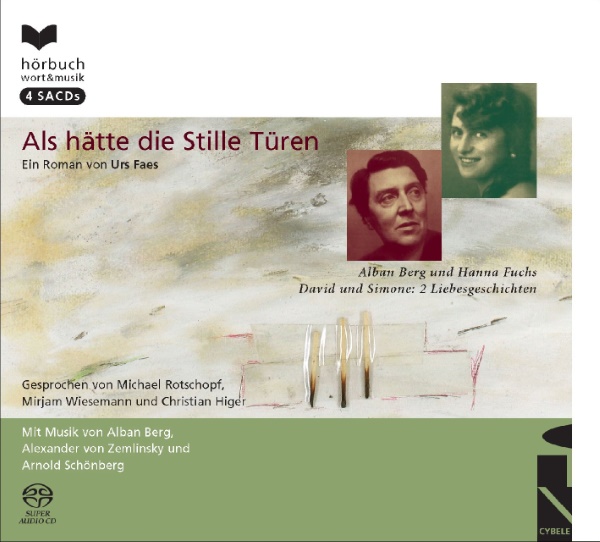
Born in Vienna in 1885, died there in 1935; Alban Berg was a composer and a member of the Second Viennese School. From 1904 to 1911 he studied with Arnold Schönberg, at first without payment because of his financial situation; in his works he worked with free atonality and twelve-note technique. His works include the String Quartet op. 3 (1910), the Piano Sonata op. 1, the Altenberg-Lieder op. 4, the opera “Wozzeck” (completed in 1921, premiered in 1925), the “Lyrische Suite” (1925), the Violin Concerto (1935) and the opera “Lulu”, left unfinished at his death. From August 1915 Berg performed military service and was later transferred to the War Ministry. The premiere of “Wozzeck” was conducted by Erich Kleiber on 14 December 1925 at the Staatsoper Berlin, the “Lyrische Suite” was first heard on 8 January 1927. Berg wrote the Chamber Concerto for piano, violin and 13 wind instruments (1925) for Arnold Schönberg’s 50th birthday; he arranged its middle movement as the “Adagio for violin, clarinet and piano”. In 1934 he drew five Symphonic Pieces from the opera as the Lulu-Suite; Erich Kleiber gave the premiere on 30 November 1934 with the Staatskapelle Berlin, and Berg dedicated the score to Schönberg for his 60th birthday. The Violin Concerto was written for Manon Gropius, the daughter of Alma Mahler; Louis Krasner played it for the first time on 19 April 1936 in Barcelona under Hermann Scherchen. Berg died on 24 December 1935 in Vienna of blood poisoning. Three albums connect him with Cybele: in 2002 the Trio Contrasts placed him alongside Einem, Scholz and Krenek on New Chamber Music: Clarinet Trios of the 20th Century, in 2010 the Essener Philharmoniker under Stefan Soltész recorded the suite Berg drew from the opera for Appassionatamente plus Lulu-Suite, and the audiobook of Urs Faes’s novel “Als hätte die Stille Türen” (2006) links Berg’s Prague encounter with Hanna Fuchs-Robettin and the “Lyrische Suite” with the playing of the DoelenKwartet.
Alban Berg
Composer