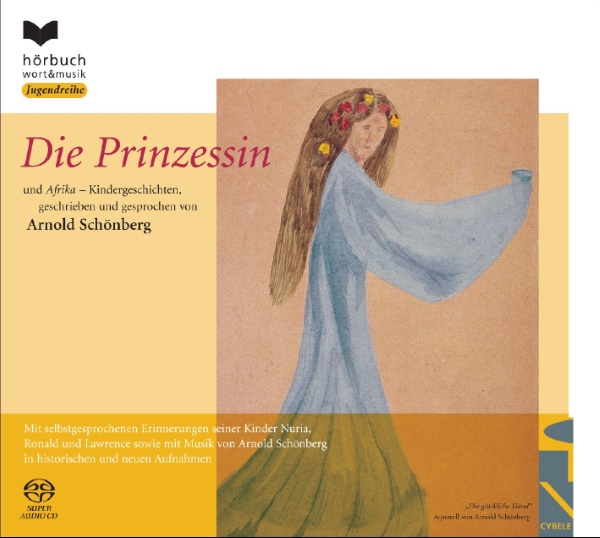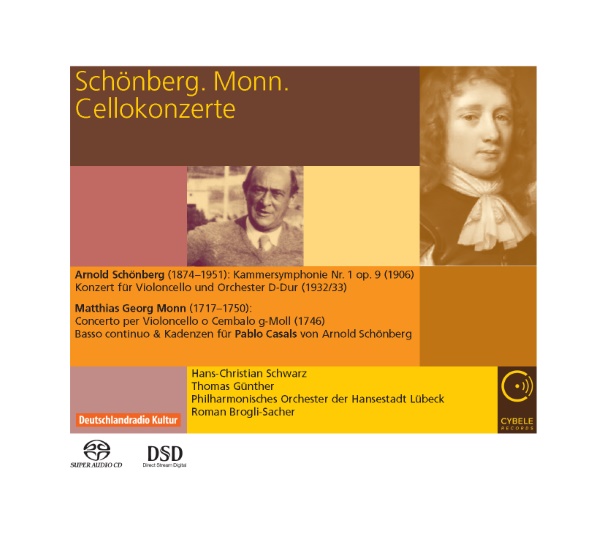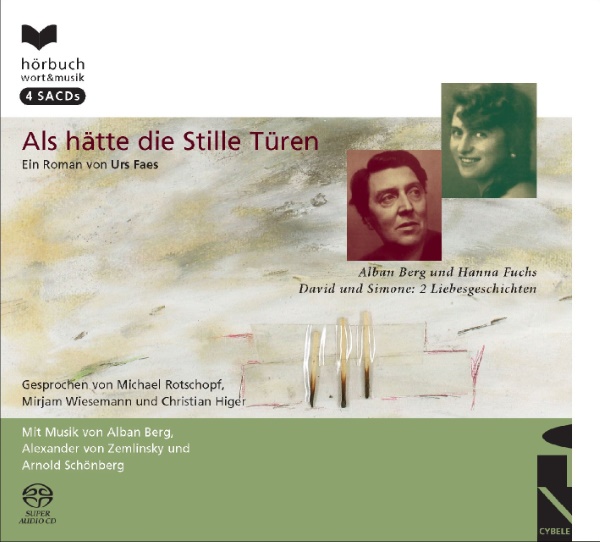
* 13 September 1874 in Vienna, died on 13 July 1951 in Los Angeles; Austrian composer, music theorist, teacher and painter; as a composer largely self-taught, apart from studies with his boyhood friend David Josef Bach and with his later brother-in-law Alexander Zemlinsky. He began with late Romantic works and from 1906 gradually freed himself from the tonal system; from about 1904 he taught mainly privately, which later gave rise to the term Wiener Schule. In 1921 he developed the method of composing with twelve tones related only to one another. In 1923 his first wife Mathilde died; the following year he married Gertrud Kolisch, with whom he had the children Nuria, Ronald and Lawrence. In 1925 he was appointed to the Preußische Akademie der Künste in Berlin; in 1933 he emigrated via Paris to the USA, where he held a professorship from 1936 to 1944. He set out his understanding of music in theoretical writings such as “Harmonielehre” (1911) and “Grundlagen der musikalischen Komposition” (1942). He was also active as a painter, producing watercolours, drawings and oil paintings. In the Cybele catalogue his music is represented on three albums. The album Schönberg. Monn. Cello Concertos (2013) brings together the Chamber Symphony No. 1 in E major op. 9 and the Concerto for Cello and Orchestra in D major (1932/33) after Matthias Georg Monn, played by Hans-Christian Schwarz (cello), Thomas Günther (harpsichord) and the Philharmonisches Orchester der Hansestadt Lübeck under Roman Brogli-Sacher. The audiobook Arnold Schönberg: Die Prinzessin (2008) combines historic recordings of his voice with recollections by his children Nuria Schoenberg Nono, Ronald Schoenberg and Lawrence Schoenberg. On the audiobook Urs Faes: Als hätte die Stille Türen (2006) his chamber music stands beside works by Alban Berg and Alexander von Zemlinsky, played by the DoelenKwartet.
Arnold Schönberg
Composer