
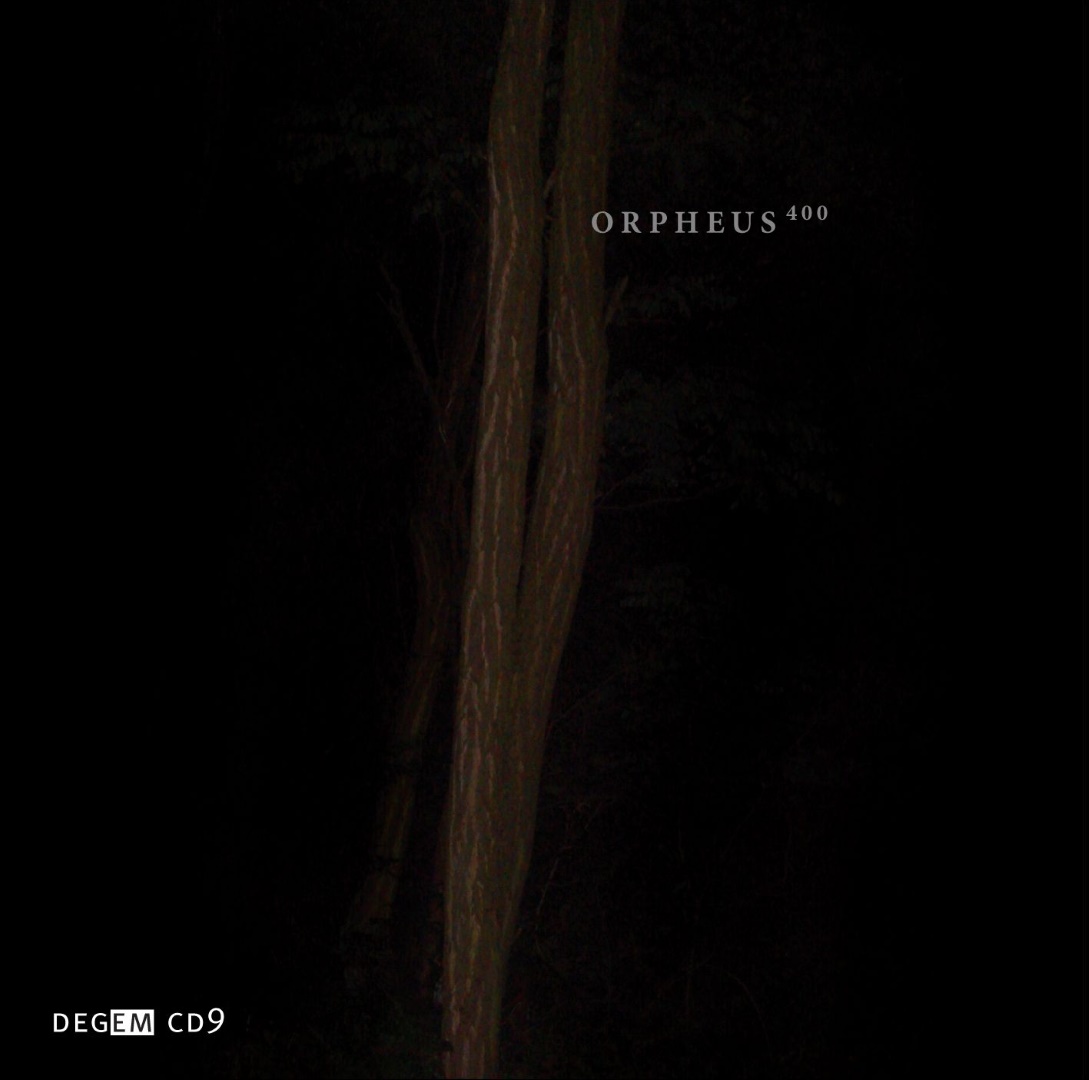
2007 marked the 400th anniversary of the premiere of Claudio Monteverdi’s “L’Orfeo”, the first high point of musical theatre, then still in its infancy. Stefan Fricke, who conceived the CD, quotes Arnold Feil: what was new about Monteverdi’s “musical fairy tale” was that he raised the diversity of musical phenomena to a veritable design principle. Fricke recalls the Orpheus of antiquity, singer and lyre player, to whom animals and trees listen and at whose song stones weep, lover, sufferer and failure, and “orphée 53” by the pioneers of musique concrète Pierre Schaeffer and Pierre Henry: at the Donaueschinger Musiktage in 1953, the first “concrete opera” with tape and live performers turned out to be less a success than a minor scandal, because of the sounds coming from the loudspeakers.
The twenty pieces by 21 composers born between 1937 and 1980 are, in Fricke’s words, extremely diverse readings of the myth. Except for Thomas Kessler’s “Countdown for Orpheus” (1966), all were written in 2007 specially for this CD and released here for the first time. Their durations range from four seconds in Franz Martin Olbrisch’s “Orphée 2007” to 400 seconds, as in Frank Niehusmann’s “Wer (Monster. Mythen. Mutationen)” and Thomas Gerwin’s “e-scape No. 4”. The titles range from Kazuya Ishigami’s “Kerberos” and Heinz-Josef Florian’s “Eurydikes Schrei” to Johannes Kreidler’s “Kontinuum mit Melodie” and Clemens von Reusner’s “Gedehnte Zeit”; Dirk Specht and Gerriet K. Sharma wrote “Orphée 49 Edit 1 (Hommage à J.C.)” together. Hans W. Koch’s “orfeus@home” opens the sequence and Andre Bartetzki’s “L’eco d’Orfeo” closes it.
The titles lead right through the myth and through the procedures of electroacoustic music: from Harald Muenz’s Still Life with Orphean Shepherd by way of Ralf Haarmann’s Herbert Stencil als Orpheus verkleidet to Dugal McKinnon’s Strane e sconosciute vie. The duo NooK — Dirk Specht and Gerriet K. Sharma — contributes its joint homage, while Thomas Gerwin’s e-scape No. 4 and Frank Niehusmann’s Wer? use the full 400 seconds. The CD runs to 76:17; the booklet is a ten-page leporello in German and English.
Founded in Berlin in 1991 as the German section of the Confédération Internationale de Musique Electroacoustique, DEGEM organises conferences, courses and concerts, publishes texts, DVDs and CDs and is involved in the annual international Sound and Music Computing (SMC) conference. In 2005, together with the ZKM in Karlsruhe, it launched a non-stop 24-hour web radio with concert recordings, portraits of composers and studios, features and reports from festivals and symposia.